
Octopus Energy Agile Tariff Review 2026
Most UK households pay a flat rate for their electricity.
Contents
- 1.What is the Octopus Energy Agile tariff?
- 2.Should you switch to Octopus Agile?
- 3.How the half-hourly pricing works
- 4.Agile vs Standard tariffs: How the costs compare
- 5.Who benefits most from the Agile tariff?
- 6.The risks and downsides of dynamic pricing
- 7.How to shift your energy use
- 8.How to switch to Octopus Agile
- 9.Final verdict
- 10.FAQs
What is the Octopus Energy Agile tariff?
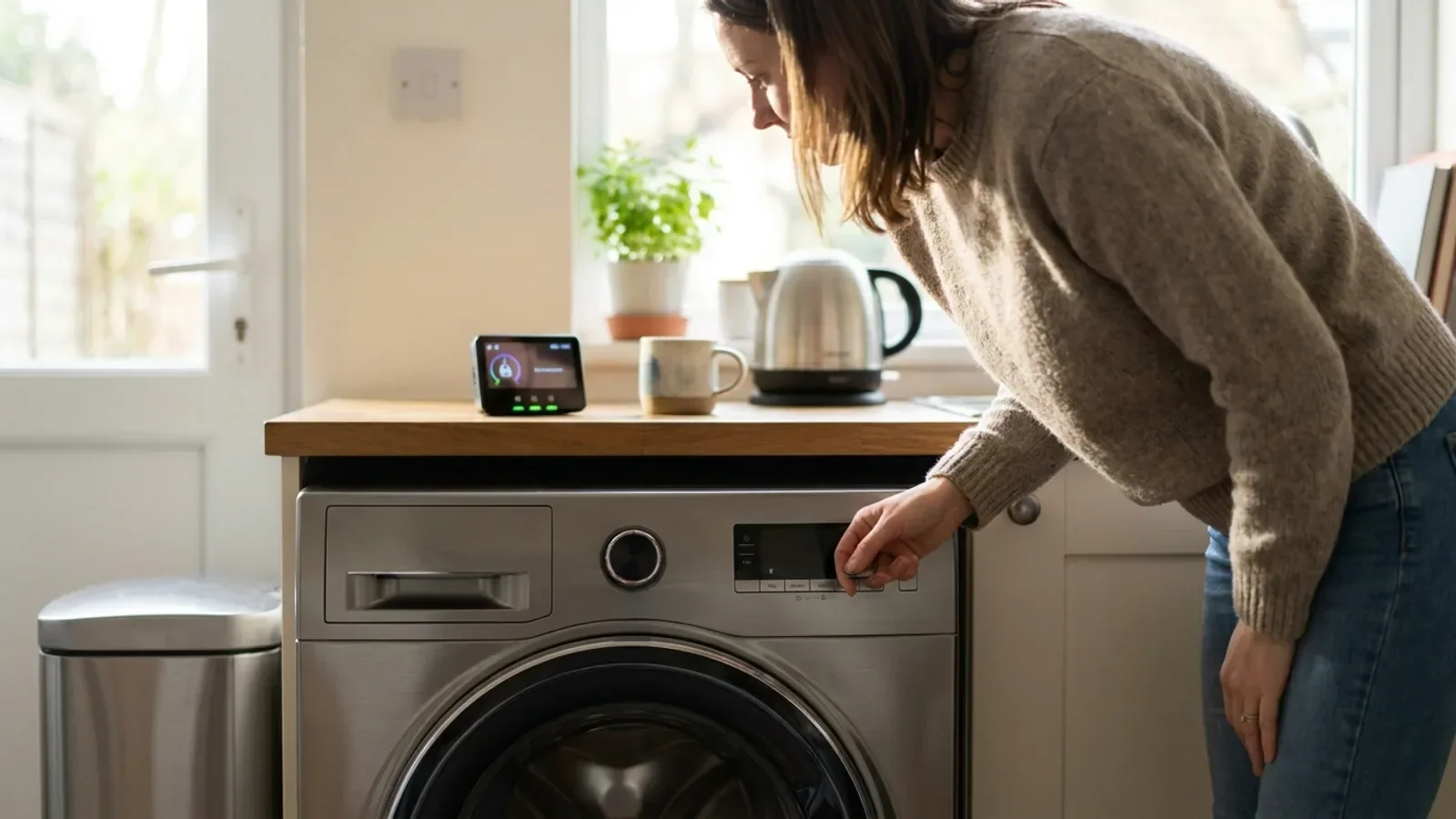
Most UK households pay a flat rate for their electricity. Whether you boil the kettle at three in the morning or roast a chicken at six in the evening, the price for each unit of power stays exactly the same. The Octopus Energy Agile tariff takes a completely different approach. It is a dynamic, time-of-use electricity tariff that tracks the day-ahead cost of energy on the wholesale market. This means the price you pay for your electricity changes every 30 minutes.[1]
The core idea behind the tariff is simple: if you use power when demand on the national grid is low and renewable generation is high, you pay a much lower rate. If you use power when everyone else in the country is using it, you pay a premium. Octopus Energy publishes the half-hourly prices a day in advance, giving you the chance to plan your usage and cut your bills.
Octopus is one of the UK's largest suppliers, and Agile is its flagship smart tariff. It is designed to reward flexibility. While it is highly popular with electric vehicle owners and homes with solar panels, standard households can also benefit if they are willing to change their daily habits. However, because prices can go up as well as down, it requires a hands-on approach to energy management and is not suited to everyone.
Should you switch to Octopus Agile?
Octopus Agile is highly recommended for homes that can shift heavy power use away from the 4pm to 7pm peak, but it is a poor choice if you need a predictable monthly bill.
How the half-hourly pricing works
To understand how Agile works, it helps to look at how energy is bought and sold. Energy suppliers buy electricity on the wholesale market, where prices fluctuate throughout the day based on supply and demand. On a standard tariff, suppliers average out these peaks and troughs to offer you a single flat rate. On Agile, Octopus passes the half-hourly wholesale prices directly to you, adding a small margin to cover their costs.
Every afternoon, usually around 4pm, Octopus releases the Agile prices for the following day. This schedule allows you to see exactly how much electricity will cost for every 30-minute block of the following day. You can view these rates in the Octopus mobile app, on their website, or through various third-party tools and smart home displays. The example figures below are averages of Octopus's own published half-hourly Agile rates for one region — the West Midlands — across 1 to 25 July 2026; Agile rates vary by region, so your own area's averages will be a little higher or lower.[1]
The tariff includes a feature known as 'plunge pricing'. On windy or very sunny days, the UK grid often generates more renewable electricity than the country needs. When this happens, wholesale prices drop below zero. Octopus passes this on to Agile customers, meaning the unit rate becomes negative and you are actually paid to consume electricity. In April 2026 the Government took certain levies off energy bills, ending the ECO scheme and moving most Renewables Obligation costs into general taxation — a change the official material describes as a saving on the typical annual bill rather than a per-unit price cut. Octopus states that it passed this through to Agile as a flat reduction of 3.5p per kWh on every half-hourly rate from 1 April 2026. Because every slot now sits 3.5p lower, prices that would previously have bottomed out just above zero can dip below it, so plunge periods crop up slightly more often than they otherwise would.[2]
While plunge pricing is a major draw, the tariff also has a built-in safety net for when wholesale costs spike. Octopus caps the maximum price you can be charged at 100p per kWh. This protects you from extreme global market shocks, though hitting 100p per kWh would still make your electricity very expensive for that specific half-hour period.
Agile vs Standard tariffs: How the costs compare
To decide if Agile is worth it, you have to compare it to a standard variable tariff. Standard tariffs are governed by the Ofgem price cap, which sets a maximum limit on what suppliers can charge for default rates. In July 2026, Ofgem updated the typical domestic consumption values, assuming an average home now uses 2,500 kWh of electricity a year, reflecting a general drop in national energy use. Under the July 2026 price cap in Great Britain, a typical dual-fuel household paying by Direct Debit spends around £1,663 a year.[1]
Octopus Energy's standard variable tariff is called Flexible Octopus. If you sign up to Octopus without choosing a smart tariff, this is the rate you will pay. As an illustration, comparing averages of Octopus's published half-hourly Agile rates for 1 to 25 July 2026 in one region — the West Midlands — against typical Flexible Octopus rates shows a clear divide in how you pay for your power. Rates and standing charges for both tariffs vary by region, so treat the figures below as a worked example rather than a quote.
| Tariff Name | Average Off-Peak (per kWh) | Average Peak (per kWh) | Standing Charge (per day, [varies by region](https://www.ofgem.gov.uk/news/changes-energy-price-cap-between-1-july-and-30-september-2026)) |
|---|---|---|---|
| Octopus Agile (West Midlands avg, 1 to 25 July 2026) | ~19.5p | ~32.4p | Agile 61.6p / Flexible (Direct Debit) 56.4p |
| Flexible Octopus (standard variable, varies by region) | ~26p | ~26p | Agile 61.6p / Flexible (Direct Debit) 56.4p |
In this July sample, the average Agile rate outside the 4pm to 7pm peak was lower. In the West Midlands, for example, the average off-peak Agile rate in July 2026 sits at roughly 19.5p per kWh, comfortably below the flat rate on a standard variable tariff such as Flexible Octopus, which averages around 26p per kWh for Direct Debit customers under the July 2026 price cap. However, during the 4pm to 7pm window, the West Midlands Agile rate jumps to an average of 32.4p per kWh. If you run high-draw appliances during this three-hour window, you will wipe out the savings you made earlier in the day.[2]
It is also worth noting the standing charge. The exact figure depends on where in the country you live, but Agile's daily standing charge in the West Midlands is currently 61.6p, slightly higher than the 56.4p that Flexible Octopus charges Direct Debit customers in the same region. Switching between Agile and Flexible therefore makes only a modest difference to your fixed daily costs — around 5p a day in this region, with Agile the dearer of the two. All of your savings on Agile must come from managing your unit rate.[3]
Who benefits most from the Agile tariff?
The Agile tariff is not a passive product. To get the best out of it, you need to actively manage when your home draws power from the grid. Because of this, certain households stand to save significantly more than others.
Electric vehicle (EV) owners are among the biggest winners. Charging an electric car requires a massive amount of electricity. If you plug your car in when you get home at 5pm on a standard tariff, you pay the flat rate. On Agile, you can schedule your car to charge at 2am when prices are at their lowest, or even negative. This can reduce the running costs of an EV to a fraction of what you would pay on a standard tariff.
Homes with solar panels and battery storage also see huge benefits. A home battery allows you to store cheap electricity and use it when prices are high. You can set your battery to charge from the grid during cheap overnight slots or plunge pricing events, and then instruct your house to run entirely off the battery during the expensive 4pm to 7pm peak. This effectively shields you from the high Agile peak rates entirely.
A common misconception is that you must have an EV or a battery to save money on Agile. This is not true. Standard households can still cut their bills by shifting their load, although how much you save — if anything — depends on your region's Agile rates and how much usage you can genuinely move, and Octopus itself warns that savings are not guaranteed. If you can delay putting the dishwasher or washing machine on until after 7pm, and avoid using electric ovens or tumble dryers during the late afternoon, you can still take advantage of the cheaper rates that run for the vast majority of the day.
The risks and downsides of dynamic pricing
While the potential savings are high, Agile comes with genuine risks. The most significant downside is the 4pm to 7pm evening peak. For many families, this is exactly when they need to use the most energy. Children come home from school, the heating or air conditioning goes on, the oven is fired up for dinner, and the television is switched on. If your household routine means you cannot avoid using heavy appliances during this window, Agile will likely result in higher bills than a standard fixed or variable tariff.
Budget certainty is another major casualty. Because prices vary every half hour based on day-ahead wholesale costs, your monthly bills will fluctuate significantly. In windy and mild months, your bill might be incredibly low. During a calm, cold winter spell where wholesale gas and electricity prices spike, your bill could rise sharply. If you rely on knowing exactly what your energy will cost each month to manage a tight household budget, Agile is not the right choice.
Finally, the tariff relies entirely on technology. You must have a working smart meter that Octopus can take half-hourly readings from — either a second-generation SMETS2 meter or a first-generation SMETS1 meter made by Secure. If your smart meter loses its Wide Area Network (WAN) signal — essentially its mobile phone connection to the data network — Octopus may estimate limited missing readings. If it cannot obtain or estimate the readings needed for Agile billing, it can charge the affected consumption on Flexible Octopus using typical consumption patterns.[1]
How to shift your energy use
Succeeding on the Agile tariff means changing how you think about everyday chores. You do not need to sit in the dark between 4pm and 7pm — lighting and televisions use relatively little power. The goal is to move the heavy, heat-generating appliances out of the peak window.
How to switch to Octopus Agile
Switching to the Agile tariff is a slightly different process from a standard energy switch. New and existing Octopus customers can sign up for Agile. You need a compatible smart meter for the tariff to start; if you do not have one, Octopus says it can arrange an installation. A domestic energy switch should take up to 5 working days, although the timing can vary.[1]
Once your switch is complete, Octopus will connect to your smart meter to ensure it can pull half-hourly readings. This check happens automatically in the background. Once they confirm your meter is sending the correct data, Octopus will email you to accept Agile’s terms and conditions. Your tariff will then change automatically.
If you are already an Octopus customer with a working smart meter, the process is even faster. You simply request the change through your online dashboard. New customers can also take advantage of a £50 referral credit if they sign up using a friend's referral link.
There are no exit fees on the Agile tariff. If you try it and find that dynamic pricing does not suit your lifestyle, you can switch back to the standard variable tariff at any time without a penalty. However, if you leave Agile, you cannot switch back to a smart import tariff for 30 days.
Final verdict
The Agile tariff is an excellent choice for flexible households, but requires active management to see the best returns.
If you have an electric vehicle, a home battery, or simply the discipline to run your heavy appliances outside of the 4pm to 7pm window, Octopus Agile can deliver significant savings against the standard price cap, though they are never guaranteed. The ability to access negative plunge pricing makes it uniquely rewarding for those who pay attention to their usage.
However, it is not for everyone. If your household routine revolves around cooking, washing, and heavily using power in the early evening, Agile will likely cost you more. It also removes the safety of a predictable monthly bill, meaning you must be comfortable with your costs fluctuating alongside the wholesale market.
Frequently asked questions
Is Agile an electricity and gas tariff?
No, Agile is an electricity-only tariff. If your home uses gas, you will need a separate gas tariff. You can hold your gas and electricity with Octopus, but only the electricity will be on Agile's dynamic pricing; check which gas tariffs are available to you.
Sources
Do I need an electric vehicle or solar panels to benefit?
While electric vehicle and battery owners see the highest savings, standard households can still benefit. By scheduling dishwashers, washing machines, and other heavy usage outside of the 4pm to 7pm peak, regular homes can still cut their costs. How much you save depends on your region's rates and how much use you can shift, and savings are not guaranteed — at times a standard tariff can work out cheaper.
Sources
Am I locked in if wholesale prices surge?
No, there are no exit fees on the Agile tariff. You can switch back to Octopus's standard variable tariff at any time. However, if you do leave, you cannot return to Agile or switch to another smart tariff for 30 days.
What happens if my smart meter loses signal?
Agile requires a compatible smart meter that can send half-hourly readings. If there are missing readings, Octopus may estimate short gaps. If it cannot obtain or estimate the readings needed to bill Agile, it can charge the affected consumption on Flexible Octopus using typical consumption patterns.
Can I get the Agile tariff on a prepayment meter?
Agile is built around half-hourly credit billing, which does not easily translate to a traditional pay-as-you-go top-up system. If you have a prepayment meter, check directly with Octopus whether you can join before applying.
Sources
Related reviews and comparisons
E.ON Next vs Fuse Energy
E.ON Next is part of the German energy group E.ON and operates as one of the UK's largest domestic suppliers. It launched in 2020 to take over customers from E.ON UK, and it later grew by taking on customers from Npower and Powershop. The supplier offers a wide range of tariffs, including standard v
Read comparison→
Octopus Energy vs British Gas
Started in 2015, Octopus Energy has grown to become the UK's largest domestic energy supplier. It operates within Octopus Energy Group and runs its services using its own tech platform, Kraken. As well as supplying energy, it focuses on smart home technology and runs a rewards scheme called Octoplus
Read comparison→Octopus Energy vs Outfox Energy
Founded in 2015 and backed by the Octopus Group, Octopus Energy is the UK's largest domestic energy supplier. It has grown through its own growth and by taking on customers from other suppliers such as Bulb and Shell Energy. A key difference is its in-house technology platform, Kraken, which runs it
Read comparison→
British Gas Review
British Gas is one of the UK's most recognised energy brands and one of the biggest domestic suppliers in the country. It is owned by Centrica, a large energy and services group. As well as supplying gas and electricity to homes, British Gas offers a wide range of home services, including boiler cov
Read review→
Utility Warehouse Review
Utility Warehouse is one of the UK's biggest domestic energy suppliers. The brand is owned by Telecom Plus PLC, a company set up in 1996 that originally ran from a pub in Henley-on-Thames before growing into a business listed on the London Stock Exchange. Utility Warehouse itself was started in Nort
Read review→Related guides
Octopus Energy Tracker Tariff Review 2026
The Octopus Tracker is a variable energy tariff provided by Octopus Energy, the UK's largest energy supplier. Instead of charging a set price for your energy over a year, or following the quarterly changes of the standard variable rate, the Tracker tariff changes its unit rates every single day. It
Read guide→
Who is cheaper than British Gas? (2026)
British Gas is one of the UK's largest energy suppliers, but staying on its default standard variable tariff is currently one of the most expensive ways to pay for your gas and electricity. Following a 13% rise in the Ofgem price cap on 1 July 2026, household energy bills have jumped again, driven b
Read guide→
Which energy suppliers are going bust?
The UK energy market has seen massive upheaval over the past few years. During the peak of the energy crisis in 2021 and 2022, wholesale costs soared and caused dozens of suppliers to collapse. By July 2026, the market has largely stabilised. However, smaller companies still occasionally fail, and t
Read guide→
Written by
Rob Gibbs
Hi, I'm Rob, and I run Energy-Review.co.uk. I initially started this project in 2018 when I was looking to switch energy suppliers and found there wasn't a website that provided simple, data-backed reviews on all the suppliers available. Since then, I have spent a lot of time (too much, some may say!) looking at all publicly available data about each supplier and writing reviews using this information. These reviews are updated as regularly as possible, and any data is backed up by a source where necessary. I have also started writing guides on various energy-related topics, which hopefully you will find useful. If you find any issues, please use our contact form to let us know.