
Is it cheaper to switch both gas and electricity to the same provider?
A typical dual-fuel home pays £1,663 a year under the current cap, and while using one supplier is easier, splitting fuels can sometimes unlock cheaper specialist rates.
Contents
- 1.Introduction
- 2.What is a dual fuel energy tariff?
- 3.Current energy prices and the October price cap
- 4.The benefits of keeping both fuels together
- 5.When it makes sense to use separate suppliers
- 6.Do dual fuel discounts actually save you money?
- 7.Managing two energy accounts in real life
- 8.How to compare tariffs and switch
- 9.Our verdict
- 10.FAQs
Introduction
Most households in Great Britain buy their gas and electricity from the same company. This arrangement is known as a dual fuel tariff. It is the most common way to pay for household energy, mainly because it keeps things simple. You get one bill, one Direct Debit to manage, and one customer service team to call if you have a problem.
However, the most convenient option is not always the cheapest. While many suppliers offer a small discount if you bring both your gas and electricity to them, this does not guarantee you will pay the lowest overall price. In some cases, splitting your fuels across two different suppliers can save you money. This is particularly true if you need a specialist electricity tariff for an electric vehicle or a heat pump, as these deals often do not include gas.
In this guide, we explain how dual fuel tariffs work, how they compare to using separate suppliers, and what you need to check before you decide to switch.
For most households, keeping gas and electricity with one provider is the most practical choice, but splitting your supply can unlock cheaper specialist rates if you have an electric vehicle or a heat pump.
Use our referral link, and we'll both get £50 credit once your switch is complete.
Existing customer? Find out how you can benefit too. T&Cs apply (only one switching offer per household)
What is a dual fuel energy tariff?
A dual fuel tariff simply means you use the same energy supplier for both your gas and your electricity. When you sign up for one of these deals, the supplier takes over both meters. They calculate your estimated annual usage for both fuels, add the costs together, and usually divide this total into 12 equal monthly payments.
Historically, households had no choice but to use separate suppliers. Regional boards supplied electricity, while a single national company supplied gas. When the energy market opened up to competition in the late 1990s, companies began offering both fuels to attract more customers. This created the dual fuel concept, which quickly became the standard way to buy energy in the UK.
Even though you pay for both fuels together, gas and electricity are still priced separately. Your supplier will charge you a specific unit rate and standing charge for your electricity, and a different unit rate and standing charge for your gas. If you look at your monthly statement, you will see a full breakdown showing exactly how much of each fuel you have used.
The main difference between this and using separate suppliers is just the administration. You only have to log into one app, give meter readings to one company, and manage one payment leaving your bank account. It is completely up to you whether you bundle your fuels together or split them. If you live in a home that only has an electricity supply and no gas connection, you will simply be on a single fuel electricity tariff.
Current energy prices and the October price cap
Before you decide whether to stick with one supplier or split your fuels, it helps to know how much energy currently costs. In Great Britain, most households are on a standard variable tariff. The rates on these tariffs are limited by the Ofgem energy price cap. The cap sets a maximum limit on how much a supplier can charge you for each unit of gas and electricity, as well as the daily standing charges. It does not cap your total bill. If you use more energy, you will pay more.
For a typical household paying by Direct Debit, the current dual-fuel price cap is £1,663 a year. This figure applies until 30 September 2026. Ofgem officially announced the next price cap on 26 August 2026. From 1 October to 31 December 2026, the cap will rise to £1,723 a year. This is an annualised increase of £60, or roughly 4%.
These typical household figures are based on Ofgem's estimates of average energy use. In July 2026, Ofgem updated these estimates to reflect the fact that people are generally using less energy due to improved home insulation and higher costs. The typical home is now expected to use 2,500 kWh of electricity and 9,500 kWh of gas each year.
Rates can differ by payment method, so compare the tariff available for your meter and how you pay. There is also a temporary change to how energy is taxed. From 1 October 2026 to 31 March 2027, electricity will benefit from a 0% VAT rate. Gas bills will continue to include the standard 5% VAT rate. This temporary tax cut makes electricity slightly cheaper during the winter months, which is especially useful if you rely heavily on electricity for heating or driving.
It is important to remember that the Ofgem price cap only applies to standard variable tariffs. If you choose to sign up for a fixed energy deal, your unit rates and standing charges are locked in for the duration of the contract. This means your prices will not go up when the cap rises in October, but they also will not fall if the cap drops next year.
The benefits of keeping both fuels together
For most people, the biggest advantage of a dual fuel tariff is convenience. Managing your household bills takes time, and when you use the same supplier for both gas and electricity, you cut the administrative work in half. You only need to set up one online account or download one mobile app. When it is time to submit your meter readings, you can do both at the same time.
Budgeting is also more straightforward. You will have a single Direct Debit leaving your bank account each month, making it easier to track your outgoings. If you build up credit on your account during the summer, that single pot of credit goes towards covering both your gas and electricity usage during the winter.
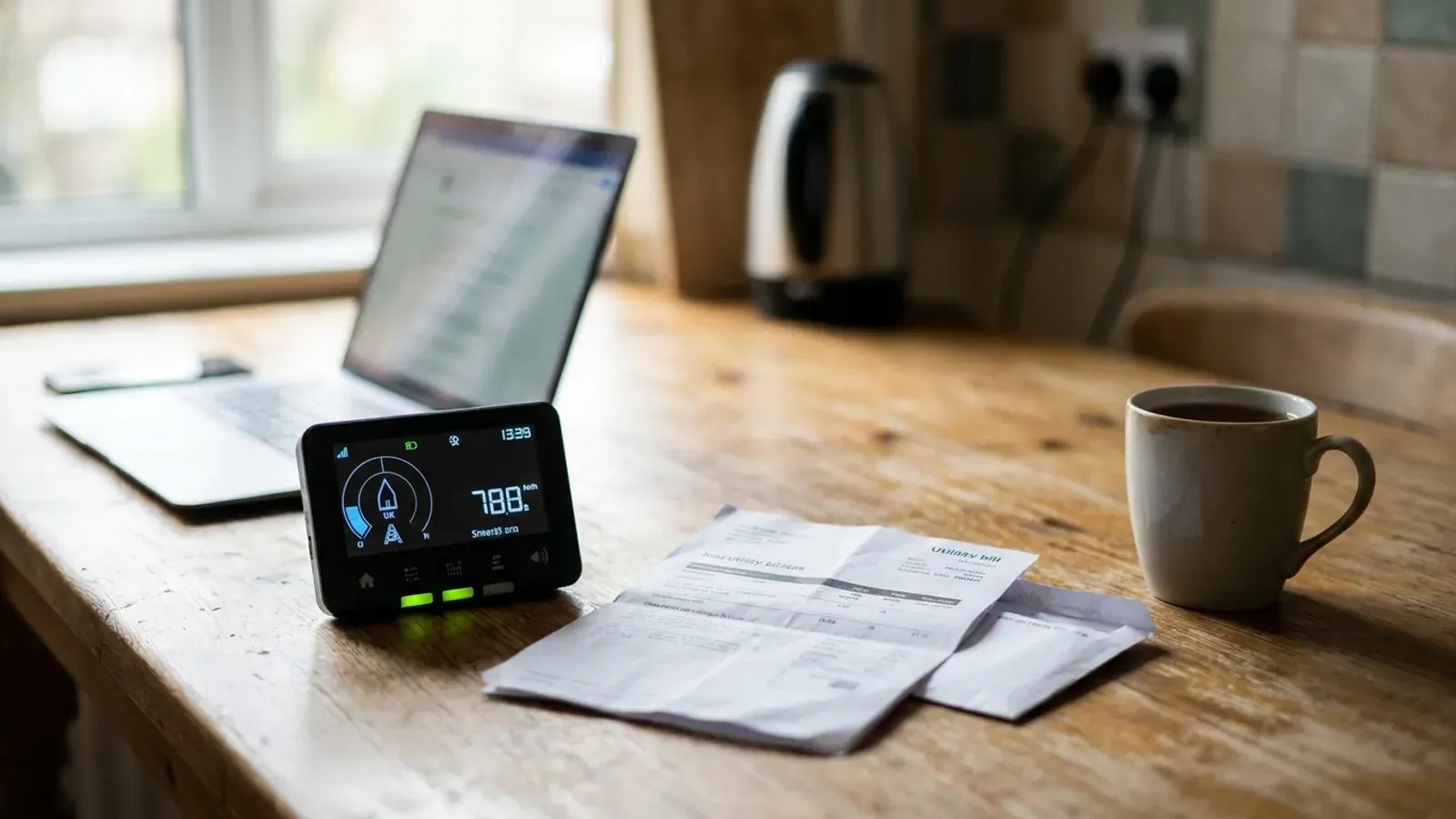
Having a single supplier is also beneficial if you use a smart meter. When both your gas and electricity are managed by the same company, your smart in-home display can easily communicate with both meters. This allows the screen to show your total energy spending in real time. If you split your supply, the in-home display will sometimes only show the usage for the fuel supplied by the company that originally installed the meter, making it harder to track your overall costs at a glance.
Customer service is another factor. If something goes wrong, or if you need to discuss your payments, you only have one company to deal with. If you fall behind on your bills, it is much simpler to arrange a single repayment plan with one supplier than to negotiate with two separate companies.
When it makes sense to use separate suppliers
While keeping everything together is easy, splitting your gas and electricity across two different suppliers can sometimes work out cheaper. Splitting your supply gives you total freedom to mix and match the best deals on the market, rather than compromising on a middle-ground dual fuel tariff.
The most common reason to split your supply is to access a specialist electricity tariff. If you drive an electric vehicle, you will likely want an EV tariff. These tariffs offer a few hours of very cheap electricity overnight, allowing you to charge your car for a fraction of the normal price. The same logic applies if you have a heat pump, as some suppliers offer specialist tariffs that give you cheaper electricity at specific times of the day to help lower your heating costs.
However, the companies that offer the best specialist electricity tariffs might not offer the cheapest gas rates. If you bundle both fuels together with the specialist provider, you might end up overpaying for your gas. By splitting your supply, you can keep your electricity with the specialist provider to get the cheap overnight charging, and move your gas to whichever supplier offers the lowest standard gas rate.
Another reason to use separate suppliers is strategic fixing. Energy prices go up and down based on the wholesale market. Sometimes, the wholesale price of electricity might drop while the price of gas stays high. If you use separate suppliers, you have the flexibility to lock in a cheap fixed deal for your electricity, while leaving your gas on a standard variable tariff to see if prices fall further.
Do dual fuel discounts actually save you money?
It is easy to assume that a dual fuel discount automatically makes a tariff the cheapest option, but this is not always true. Suppliers design these discounts to attract customers, but the base price of the energy is what really matters. A small percentage discount on a very expensive tariff will still cost you more than a tariff with no discount but a much lower unit rate.
When you compare prices, you should always look at the total estimated annual cost, rather than focusing on the discount itself. The total estimated cost takes into account the unit rates, the standing charges, and any discounts, giving you a single figure to compare against other deals.
You should also pay attention to how the standing charges work. A common myth is that you only pay one standing charge if you are on a dual fuel tariff. This is incorrect. You pay a daily standing charge for your electricity meter and a separate daily standing charge for your gas meter, regardless of whether they are with the same company or different ones.
Some suppliers do apply their dual fuel discount by lowering one of the standing charges, which can make a noticeable difference to low-use households. But you will still be paying two standing charges in total.
If you are thinking about splitting your supply, run a quote for your electricity with one supplier, and a quote for your gas with another. Add the two estimated annual totals together. Then, run a quote for a dual fuel tariff. Compare the combined total of the split supply against the single total of the dual fuel tariff to see which is genuinely cheaper.
Managing two energy accounts in real life
If you decide to split your gas and electricity, you need to be prepared for the extra administration. You will have two separate accounts to manage. This means two different logins, two different apps, and two separate sets of meter readings to submit each month. If you have a smart meter, it should send the readings automatically, but you will still need to check two different accounts to monitor your usage.
You will also have two separate Direct Debits leaving your bank account. These might come out on different days of the month, which can make budgeting slightly more complicated.
Another factor to consider is account credit. During the summer, you usually use less energy than you pay for, building up credit on your account. If you have a dual fuel tariff, this credit sits in one pot and helps cover your higher winter usage for both fuels. If you split your supply, you will build up credit in two separate pots. If you use a lot of electricity but very little gas, you might end up with too much credit in your gas account and not enough in your electricity account. You would have to manually request a refund from your gas supplier to help pay your electricity bill.
None of these issues are dealbreakers, but they do require a bit more effort. You have to decide if the financial savings from splitting your supply are worth the extra time it takes to manage two accounts.
How to compare tariffs and switch
Switching your energy supplier is a simple process, whether you are moving both fuels or just one. If you want to move from a dual fuel tariff to separate suppliers, you just need to apply for a single fuel electricity tariff with one company, and a single fuel gas tariff with another.
Once you agree to a new domestic energy contract, you can cancel within 14 days if you change your mind. Your new supplier will tell you the switching date, and you can ask for a later date.[1]
Your new supplier will arrange the switch, and there will be no interruption to your physical energy supply. It should take up to five working days, unless you choose a later switching date.
Finally, you are protected by Ofgem's Guaranteed Standards for Switching. If your new supplier delays the switch beyond the allowed timeframe, or if your old supplier takes too long to refund any credit left on your account, they must pay you compensation. These rules apply equally whether you are switching a single fuel or a dual fuel tariff.
Our verdict
For most households, a dual fuel tariff is the most practical choice, but EV owners should look at splitting their supply to access cheaper specialist rates.
Keeping your gas and electricity with one provider cuts your administration in half, gives you a single Direct Debit to manage, and often comes with a small discount. If you are on a standard variable tariff or a standard fixed deal, bundling your fuels is usually the best approach.
However, if you need an electricity tariff designed for an electric vehicle or a heat pump, you might find that the cheapest electricity provider does not offer the best gas rates. In these cases, splitting your supply can lead to genuine savings that easily outweigh the hassle of managing two accounts.
Frequently asked questions
How do I know if I am on a dual fuel tariff?
If you receive a single bill covering both your gas and electricity from the same supplier, you are on a dual fuel tariff. You will also only have one Direct Debit leaving your bank account to cover your energy usage.
Does switching suppliers take a long time or cut off my power?
No. Your new supplier handles the transition behind the scenes, and there is no interruption to your physical energy supply. It should take up to five working days, unless you choose a later switching date.
Can I have a smart meter if I use two different suppliers?
Yes, you can still have smart meters if you use separate suppliers. However, your in-home display might only show the usage data for one of your fuels, usually the one supplied by the company that originally installed the meter. Both meters will still send automatic readings to their respective suppliers.
What happens to my account credit if I switch?
If your account is in credit when you switch to a new supplier, your old provider must refund the balance to you. Under Ofgem's Guaranteed Standards, if they delay this refund, they are required to pay you compensation.
Are standing charges higher if I split my supply?
You pay a separate daily standing charge for your gas meter and your electricity meter, regardless of whether you use one supplier or two. While some providers offer a small discount on one of the standing charges if you bundle your fuels, the base standing charges apply to both single and dual fuel setups.
Related reviews and comparisons

British Gas Review
British Gas is part of the Centrica group, and its brand history stretches back more than 200 years. Today, its household business combines energy supply with home services. That background helps explain its approach: it deals with both the energy homes use and the wider task of keeping them warm.
Read review →EDF Energy vs OVO Energy
EDF Energy is part of the French state-owned EDF Group. Its household supply business sits alongside the group's UK electricity generation activity. This gives EDF a different background from a supplier focused mainly on buying and selling energy, although a household's electricity backing still dep
Read comparison →
100Green Review
100Green was founded in 2001 by Doug Stewart, originally as Green Energy Ltd. Stewart is now its Executive Chairman, and the company remains privately owned. Its background is in renewable energy, with an approach built around sustainability, fairness and clear dealings with customers.
Read review →
Octopus Energy Review
Octopus Energy puts buying renewable power and helping households change when they use energy at the centre of its approach. It buys renewable electricity from UK generators through long-term purchase agreements, alongside its role supplying household energy.
Read review →Scottish Power vs Tulo Energy
Scottish Power is one of the UK's largest domestic energy suppliers. It started in 1990 and is now owned by the Spanish energy group Iberdrola. The company offers standard energy supply as well as solar panels, home batteries, electric vehicle chargers, and boiler care plans. It also runs a long-sta
Read comparison →Related guides

What is the average gas and electricity bill in the UK?
Energy bills remain a major part of household spending. Over the last few years, the cost of gas and electricity has seen massive changes, driven heavily by global events that affect the price suppliers pay for wholesale energy. For example, the Ofgem price cap rose by roughly 13% in July 2026, larg
Read guide →
What is a Dual Fuel discount?
When you compare energy tariffs or set up a new account, suppliers usually ask if you want a dual fuel deal. This simply means you choose the same company to supply both your gas and your electricity. For years, energy companies used a dedicated dual fuel discount to encourage households to bundle t
Read guide →
Are Octopus Energy saving sessions worth it?
Energy bills remain a heavy burden for many households. While finding a cheaper tariff is one way to cut costs, Octopus Energy offers a different approach. Its Saving Sessions scheme pays you for changing when you use electricity.
Read guide →
Written by
Rob Gibbs
Hi, I'm Rob, and I run Energy-Review.co.uk. I initially started this project in 2018 when I was looking to switch energy suppliers and found there wasn't a website that provided simple, data-backed reviews on all the suppliers available. Since then, I have spent a lot of time (too much, some may say!) looking at all publicly available data about each supplier and writing reviews using this information. These reviews are updated as regularly as possible, and any data is backed up by a source where necessary. I have also started writing guides on various energy-related topics, which hopefully you will find useful. If you find any issues, please use our contact form to let us know.