
How do I get a smart meter?
Smart meters are now common in Great Britain. In the latest official figures, covering the end of March 2026, around 39 million domestic smart meters had been.
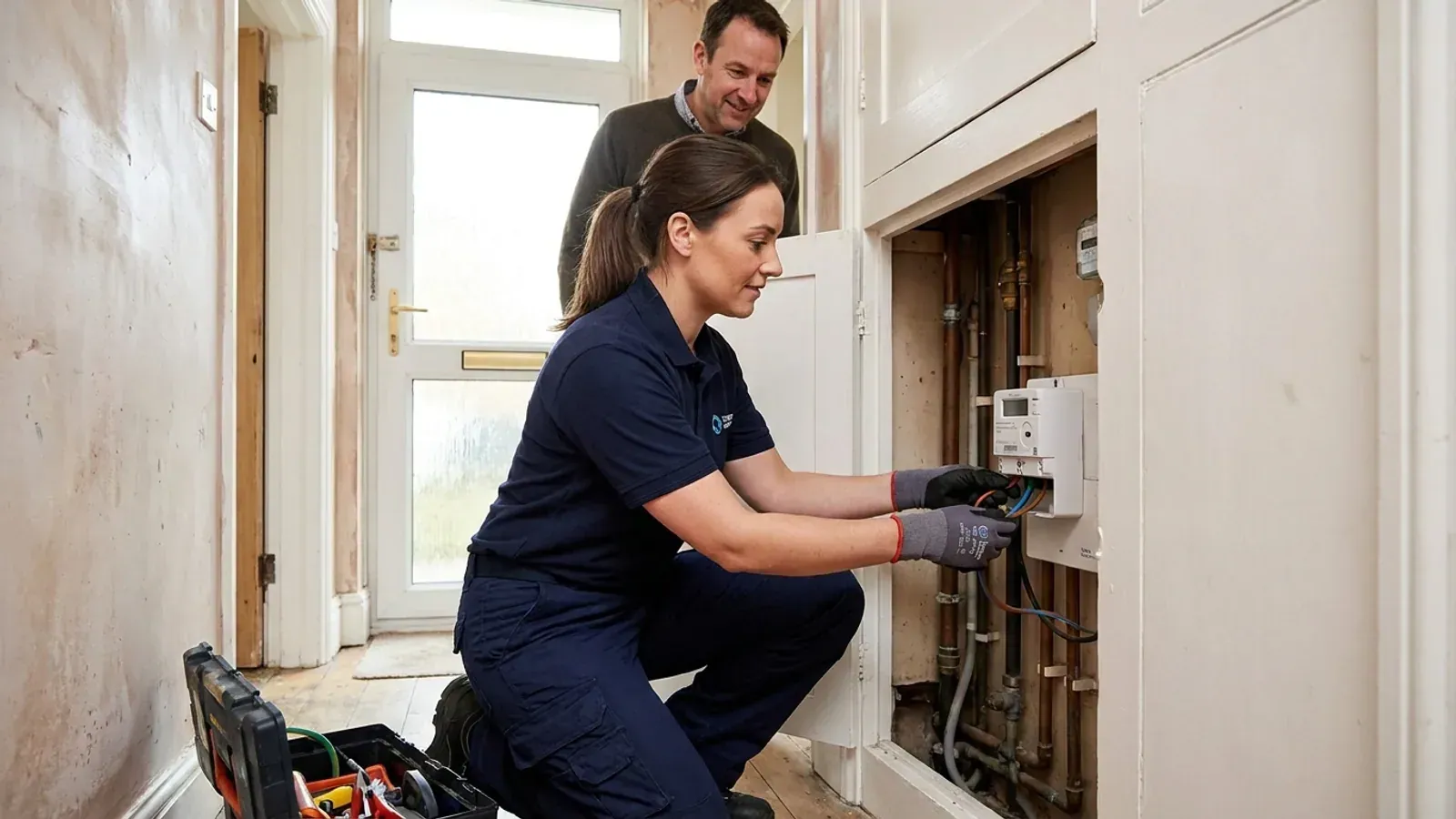
Upgrading to a smart meter
Smart meters are now common in Great Britain. In the latest official figures, covering the end of March 2026, around 39 million domestic smart meters had been installed, representing 72% of domestic meters. If you still have an older traditional meter, getting an upgrade is a straightforward process managed entirely by your energy supplier.
The government originally set strict targets for suppliers to offer a smart meter to every home by the end of 2025. Now that this deadline has passed, the official framework has shifted. In 2026, suppliers are required to take all reasonable steps to complete the rollout and keep meters working. Binding annual milestones for new installations and pre-emptive replacements begin on 1 January 2027.
Because the vast majority of homes are already connected, the pace of new installations has slowed down. In May 2026, around 158,000 installations took place across Great Britain, which is a 25% drop compared to the same time the previous year. The focus for energy companies has now moved from a rollout race to long-term maintenance, repairing faulty meters, and upgrading the supporting infrastructure.
Use our referral link, and we'll both get £50 credit once your switch is complete.
Existing customer? Find out how you can benefit too. T&Cs apply (only one switching offer per household)
Costs and potential savings
There are absolutely no upfront costs to get a smart meter. The meter itself, the small In-Home Display (IHD) screen that comes with it, and the installation appointment are completely free at the point of need. If an energy supplier tries to charge you a direct fee for a standard domestic smart meter installation, they are breaking the rules.
However, the national rollout is not entirely free. The cost of manufacturing the meters, paying the engineers, and running the secure data network is absorbed into everyone's energy bills. This adds an estimated £30 to £70 a year to the average household energy bill. You pay this hidden cost through your standing charges and unit rates regardless of whether you actually have a smart meter installed in your home. The In-Home Display screen uses a tiny amount of electricity to run, costing less than £2 a year.[1][2][3][4]
A common misconception is that installing a smart meter will automatically lower your energy bills. This is not true. The meter is simply a measuring device. It guarantees accurate billing, which puts an end to estimated bills and shock back-billing, but it does not magically reduce the amount of gas or electricity your home uses.
To save money, you must actively engage with the data. Research shows that around two-thirds of people with a smart meter do not regularly check their usage, meaning they miss out on the financial benefits. Households that do use their In-Home Display to identify waste and adjust their habits save an average of £60 to £90 a year.
The biggest savings come from switching to specialised time-of-use tariffs. These tariffs offer much cheaper electricity rates during off-peak hours. They are designed for households that can shift heavy energy use to the night, such as charging an electric vehicle or running a heat pump. Accessing these tariffs requires a working smart meter that sends half-hourly readings. For households that use them properly, time-of-use tariffs can yield further savings of around £200 to £500 a year.
Eligibility and renters' rights
Almost every home in Great Britain is eligible for a smart meter. The easiest way to find out if your home is ready is to contact your current energy supplier. They are responsible for providing and fitting the equipment.
If you rent your home, you have the right to request a smart meter as long as you pay the energy bills directly to the supplier. If the account is in your name, the choice is legally yours. However, it is highly recommended to check with your landlord before booking the installation. This is a polite step that helps avoid any disputes over changes to the property, especially if your tenancy agreement includes clauses about altering the utility meters. If your landlord pays the energy bills and recharges you, they hold the account and must be the one to request the upgrade.
For households with solar panels, you need a meter capable of providing half-hourly export readings to be paid for the electricity you export through the Smart Export Guarantee (SEG). This will typically be a smart meter, but it does not have to be a second-generation smart meter. This meter accurately records exactly how much electricity you send back to the national grid.
How to request your smart meter
Energy suppliers manage the entire installation process. Because they use trained engineers to fit the equipment, they often focus on specific geographic areas at different times. Here is how the process usually works.
Compensation for delays and faults
Because the rollout has moved into a more mature phase, the energy regulator Ofgem has introduced strict new legal protections to ensure suppliers maintain high standards. On 23 February 2026, Ofgem updated the Guaranteed Standards of Performance (GSoP) with rules specifically covering smart meters.
Under these new rules, your energy supplier is legally required to automatically pay you £40 in compensation if they fail to meet certain service standards. You do not need to apply for this money; it should be credited to your account automatically.
You are entitled to the £40 payment if you wait more than six weeks for a first-time smart meter installation appointment after requesting one. You will also receive the £40 payout if the engineer misses the scheduled appointment, or if the installation fails on the day due to a fault that is within the supplier's control.
The rules also cover ongoing maintenance. If you report a problem with an existing smart meter, your supplier must provide an initial assessment and a clear plan to resolve the issue within five working days. If they fail to meet this five-day deadline, they must pay you the £40 compensation.
What happens on installation day
On the day of your appointment, your supplier will usually send a text or email to confirm when the engineer expects to arrive. You must ensure that someone over the age of 18 is present at the property for the entire duration of the installation, even if your meters are located outside in a meter box.
The installation process typically takes between one and two hours. If you are having both gas and electricity smart meters installed at the same time, expect the job to take around 90 to 120 minutes. The engineer will need clear access to your existing meters. They will remove the old equipment and fit the new smart meters in exactly the same location.[1]
Before the engineer arrives, check the space around your current meters. A smart electricity meter is slightly larger than an older traditional meter, while smart gas meters are roughly the same size. As a general rule, there needs to be about 30 cm of clear, unobstructed space in front of and around the meters so the engineer can work safely. If your meters are crammed into a tight cupboard or blocked by heavy furniture, clear the area beforehand. If you are unsure whether the new meter will fit, contact your supplier before the appointment day.
For safety reasons, the engineer will need to briefly turn off your gas and electricity supply while they swap the meters over. This usually lasts for around 20 minutes per fuel. Once the new meters are fitted, the engineer will turn the power back on and run a series of safety checks to ensure everything is working correctly.
Finally, the engineer will set up your In-Home Display screen, link it to the meters, and show you how to read the data. They will also take away your old meters and clear up any rubbish from the installation.
Getting connected and switching suppliers
Once the engineer leaves, your smart meter might not start sending data to your supplier immediately. It usually takes a few days for the system to fully connect to the secure national data network, and in some cases, it can take up to two weeks. During this time, your In-Home Display might not show your full usage data.
If you had a dual fuel installation, you might find that the electricity data appears on the screen a few days before the gas data. This is completely normal and usually resolves itself within a week once both meters finish syncing with the network.
A common worry for consumers is that a smart meter will lose its smart functions and go 'dumb' if they switch to a different energy supplier. This was a genuine problem with some older, first-generation meters. New installations should normally use second-generation smart meters, which connect to the Data Communications Company (DCC) network and are compatible across suppliers. However, a meter can still temporarily lose smart connectivity after a switch or because of a communications issue, so you may occasionally need to provide manual readings.[1]
Frequently asked questions
Do I have to pay an installation fee for a smart meter?
No. There are no upfront costs or direct installation fees to get a standard domestic smart meter. The cost of the national rollout is absorbed into everyone's energy bills, adding roughly £30 to £70 a year to the average household's standing charges and unit rates.
Will a smart meter automatically lower my energy bills?
No, a smart meter is just a measuring device. It ensures your bills are accurate and stops estimated charges, but it does not reduce your energy consumption. To save money, you need to use the data on your In-Home Display to spot waste and change your habits, which saves the average home £60 to £90 a year.
Can I get a smart meter if I rent my home?
Yes, if you pay your energy bills directly to the supplier and the account is in your name, you have the right to request a smart meter. However, it is always recommended to check with your landlord first to avoid any disputes over changes to the property.
What happens if my supplier delays the installation?
Under Ofgem rules introduced in February 2026, your supplier must automatically pay you £40 in compensation if you wait more than six weeks for a first-time installation appointment. You will also get £40 if the engineer misses the appointment or if the installation fails due to a fault on the supplier's end.
Will my smart meter stop working if I switch suppliers?
New installations should normally use second-generation smart meters, which are compatible across suppliers through the national communications network. In some cases, a meter can temporarily lose its smart connection after a switch, so you may need to provide manual readings while your supplier resolves it.
Related reviews and comparisons
EDF FreePhase Dynamic prices
Three daily electricity price bands that follow the wholesale market, published a day ahead on a twelve-month agreement with no exit fees.
Read more →EDF FreePhase Static prices
Fixed day, night and peak bands for twelve months, with free electricity at set times and no exit fees.
Read more →Prime Outgoing Octopus prices
A fixed-term export tariff that pays a higher rate from 4pm to 7pm and a lower rate at other times.
Read more →
British Gas Review
British Gas is part of the Centrica group, and its brand history stretches back more than 200 years. Today, its household business combines energy supply with home services. That background helps explain its approach: it deals with both the energy homes use and the wider task of keeping them warm.
Read review →
British Gas vs Scottish Power
British Gas is one of the UK's oldest and largest domestic energy suppliers. Owned by Centrica Group, it supplies gas and electricity to millions of homes and operates as Scottish Gas in Scotland. It pairs its energy tariffs with smart home technology from its Hive brand to offer cheaper rates to us
Read comparison →Related guides
Smart meter FAQs
Smart meters are the current standard for measuring household energy use in Great Britain. Unlike older traditional meters with spinning dials or digital displays that you have to read yourself, smart meters automatically send your gas and electricity readings straight to your supplier. This puts an
Read guide →
Average Gas and Electricity Bill for a Five Bedroom House (2026)
Living in a large five-bedroom house means you have more space to heat, more rooms to light, and usually more people using hot water and appliances. Because of this, your gas and electricity bills will be noticeably higher than the national average. When you hear news reports about the typical house
Read guide →
Octopus Energy Refer a Friend Code – 2026
Octopus Energy runs one of the most popular refer-a-friend schemes in the UK energy market. While many suppliers stopped offering sign-up bonuses during the recent energy crisis, Octopus kept its scheme open. If you use a referral link from an existing customer to switch your gas or electricity, you
Read guide →
Written by
Rob Gibbs
Hi, I'm Rob, and I run Energy-Review.co.uk. I initially started this project in 2018 when I was looking to switch energy suppliers and found there wasn't a website that provided simple, data-backed reviews on all the suppliers available. Since then, I have spent a lot of time (too much, some may say!) looking at all publicly available data about each supplier and writing reviews using this information. These reviews are updated as regularly as possible, and any data is backed up by a source where necessary. I have also started writing guides on various energy-related topics, which hopefully you will find useful. If you find any issues, please use our contact form to let us know.