
How do smart meters work?
A smart meter is a device that replaces the old-fashioned standard meter in your home.
Contents
- 1.What is a smart meter?
- 2.The main parts of a smart meter setup
- 3.How smart meters send your data
- 4.Gas vs electricity: Why they update differently
- 5.Are smart meters accurate and what is 'dumb mode'?
- 6.How to read your smart meter
- 7.Can a smart meter save you money?
- 8.Installation rules and your rights in 2026
- 9.FAQs
What is a smart meter?
A smart meter is a device that replaces the old-fashioned standard meter in your home. It measures how much gas and electricity you use, just like a traditional meter does. The main difference is that a smart meter sends these readings to your energy supplier automatically.
Because the meter talks directly to your supplier, you no longer have to read your meter manually or wait for a technician to visit your home to take a reading. Your bills are based on the exact amount of energy you use, rather than estimates. This removes the guesswork from your monthly energy costs.
By the end of March 2026, more than 41 million smart and advanced meters had been installed in homes and small businesses across Great Britain. Around 72% of all meters were smart or advanced, with more than 38 million operating in smart mode or classified as advanced. While they do the same basic job as the old meters, the technology inside them and the networks they use to communicate are entirely different.
Use our referral link, and we'll both get £50 credit once your switch is complete.
Existing customer? Find out how you can benefit too. T&Cs apply (only one switching offer per household)
The main parts of a smart meter setup
When you get a smart meter installed, the engineer will usually fit a few different pieces of equipment. If your home uses both gas and electricity, you will still have two separate meters, just as you did before. However, they now work together as a system.
The Communications Hub is the most important part of the setup. In most dual-fuel homes, this hub is attached directly to the electricity meter. The gas meter then sends its readings to this hub, which packages all the information together and sends it off to your supplier. If your home only has gas, or your gas meter is too far away from the electricity meter, the engineer might need to install a separate, standalone hub just for the gas meter.
How smart meters send your data
Many people assume that smart meters rely on their home internet connection to work. This is not the case. Smart meters use their own dedicated, secure networks to communicate. There are two main networks involved in getting your energy readings from your meter to your supplier.
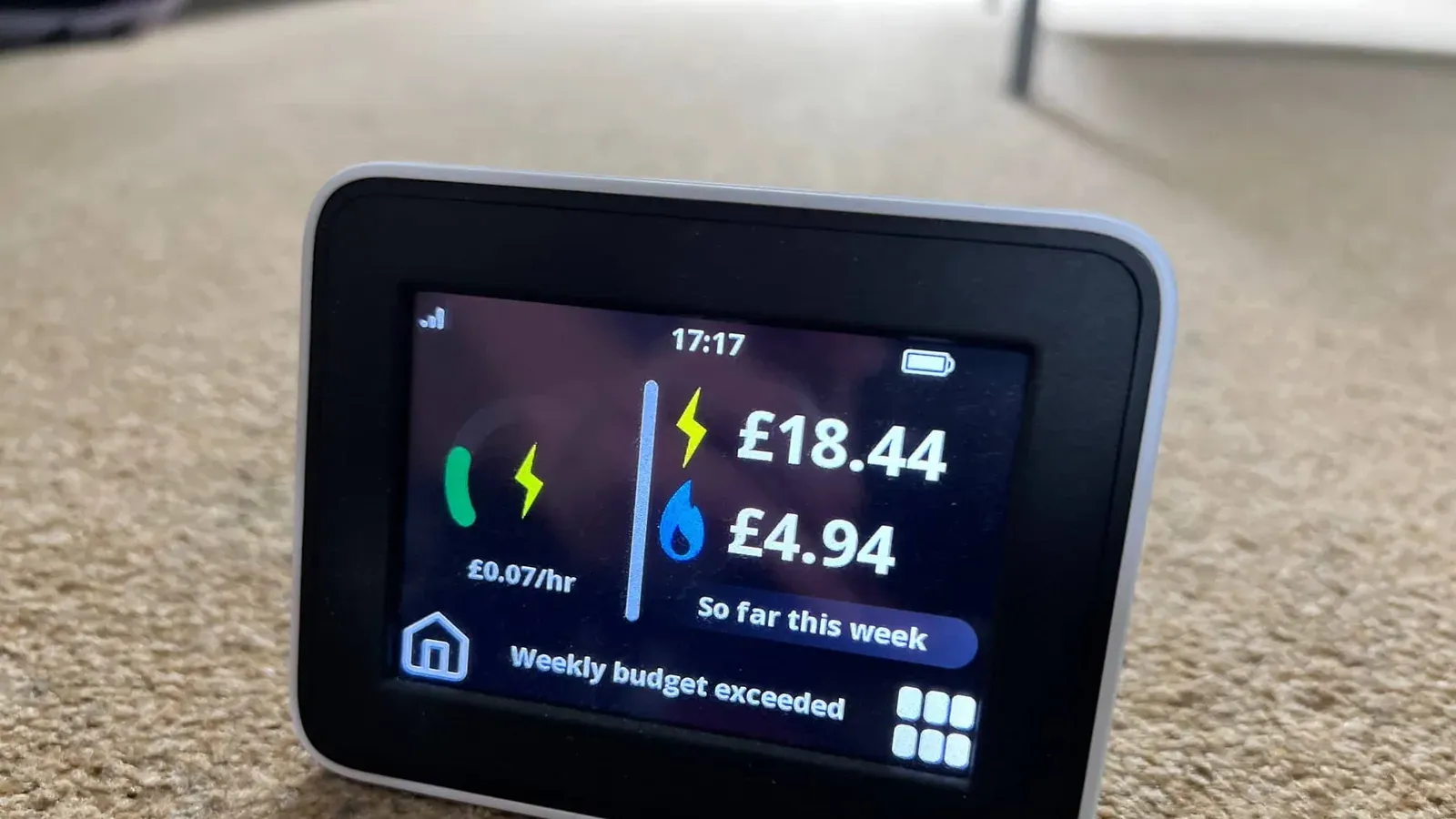
The first is the Home Area Network (HAN). This is a short-range wireless network, similar to Bluetooth, that connects the devices inside your home. The HAN allows your gas meter to talk to your electricity meter's communications hub. It also connects the hub to your In-Home Display, so you can see your live usage on the screen.
The second is the Wide Area Network (WAN). This is the external network that sends your data from the communications hub to the Data Communications Company (DCC). The DCC is the central organisation that manages the smart meter network across Great Britain. Once the DCC receives your data, it securely passes it on to your energy supplier, the network operators, and any authorised third parties you have agreed to share it with.
The WAN works differently depending on where you live. In the North region, smart meter data has traditionally been transmitted over Arqiva's long-range radio network, although 4G is also now available. In the Central and South regions, the network uses cellular connectivity. Because the UK's mobile networks are currently turning off their older 2G and 3G signals, a massive upgrade programme is underway in 2026. Older communications hubs are being replaced or upgraded to work on 4G networks, with companies like Vodafone helping to provide the new connections.
The industry is also trialling a new system called Virtual WAN (VWAN) for homes without suitable network coverage. With the customer's consent and compatible equipment, it uses the home's broadband connection to carry smart-meter communications.
Gas vs electricity: Why they update differently
If you watch your In-Home Display, you will notice that your electricity usage changes almost instantly when you boil a kettle or turn on an oven. However, your gas usage updates much slower. This is not a fault with the system, but a deliberate design choice based on safety.
| Feature | Electricity meter | Gas meter |
|---|---|---|
| Power source | Mains electricity | Internal lithium battery |
| Update speed | Every 10 seconds | Every 30 minutes |
| Connection | Houses the comms hub | Connects to the hub wirelessly |
Because gas is highly flammable, it is not safe to wire a gas meter directly into your mains electricity supply. Instead, gas meters are powered by special lithium batteries designed to last between 10 and 20 years. If the gas meter sent updates every few seconds like the electricity meter does, the battery would run flat in a matter of months.
To save power, the gas meter spends most of its time asleep. It wakes up every 30 minutes, sends a batch of readings across the Home Area Network to the communications hub, and then goes back to sleep. This means your gas data is never truly live, but it is accurate enough to give you a clear picture of what you are spending each day.[1][2][3]
Are smart meters accurate and what is 'dumb mode'?
Smart meters are highly accurate. They have to pass strict industry tests before they can be installed in homes. In fact, because they do not rely on the moving mechanical dials found in older meters, they are generally considered more accurate over the long term. They measure exactly what you use, and because they send that data directly to your supplier, they remove the need for estimated bills.
However, this accuracy relies entirely on the meter keeping its wireless connection. Because some smart meters use mobile networks to send data to the DCC, they can suffer from similar signal problems to a mobile phone. If the mobile signal in your area drops, or if your meter relies on an older 3G network that has been switched off, the meter loses its connection to the supplier.
Smart meters can lose their connection for a range of technical reasons. The industry is replacing 2G and 3G communications equipment with 4G equipment before those services are due to end in 2033. If this happens to you, the physical meter on your wall is still working and completely safe. You just need to read the numbers on the front of it and type them into your supplier's app or website, exactly as you would have done with a traditional meter.
How to read your smart meter
Even though your smart meter sends readings automatically, there are times you might want to check your usage yourself. There are three main ways to do this.
Sometimes your IHD might stop working or lose its connection to the meter, even if the meter itself is still successfully sending readings to your supplier. If your screen goes blank, check your supplier's app first. If your usage data is still updating there, your meter is fine and the issue is just with the display unit.
Can a smart meter save you money?
A smart meter does not automatically cut your energy bills just by being on the wall. The price you pay for each unit of gas or electricity stays the same. However, a smart meter gives you the tools to lower your bills by changing your habits and accessing cheaper tariffs.
On average, households save around £60 to £90 a year simply by having an In-Home Display. When you can see exactly how much it costs to boil a full kettle or leave the heating on in an empty room, you are more likely to turn things off. Across the country, this adds up. Government analysis in 2026 showed that households with smart meters saved a combined estimated £700 million on their bills the previous year.
The biggest savings come from switching to time-of-use tariffs. These are special energy plans that offer much cheaper electricity at certain times of the day, usually overnight. They are designed for people who need to charge an electric vehicle or run a heat pump. Households that use a smart meter to access these tariffs can save roughly £200 to £500 a year compared to a standard flat-rate tariff.
You also need a smart meter if you have solar panels and want to be paid for the extra electricity you send back to the grid. The government's Smart Export Guarantee (SEG) scheme requires an export meter that can measure export at half-hourly intervals. This will often be a smart meter, but it does not have to be one.
Installation rules and your rights in 2026
Getting a smart meter installed is free. There is no upfront cost for the consumer. The cost of the nationwide rollout, the engineers, and the meters themselves is shared across everyone's energy bills through the daily standing charge.
Smart meters are not a legal requirement. You have the right to refuse one if you prefer to keep your traditional meter. If your meter needs replacing, suppliers are generally required to install a smart meter unless there is a good reason not to. You can choose not to accept an offered smart-meter installation, although this may limit your tariff choices.
To protect consumers during the rollout, Ofgem introduced strict new Guaranteed Standards of Performance (GSOP) rules on 23 February 2026. Energy suppliers must now pay you an automatic £40 compensation if they fail to meet specific standards.
When suppliers must pay the £40 compensation:
- If they fail to offer you a first-time installation appointment within 6 weeks of you asking for a smart meter.
- If the installation fails because of a fault on their end, such as the engineer turning up without the right equipment.
- If you report a broken or non-communicating smart meter and they fail to give you a clear 'resolution plan' within 5 working days.
Alongside these compensation standards, suppliers must take all reasonable steps to repair faulty smart meters as soon as possible and within 90 days of being notified.
Frequently asked questions
Do smart meters need Wi-Fi to work?
No. Smart meters use their own secure mobile network to send readings to your supplier. However, the newest 2026 hubs can use your home Wi-Fi as a backup connection if the mobile signal in your area is very poor.
Can my supplier force me onto a prepayment meter remotely?
Smart meters do have the technical ability to be switched from credit to prepayment mode remotely. However, suppliers can only do this as a last resort for debt recovery after required checks and attempts to agree payment. They must not do so where prepayment would be unsafe or impractical for the household.
Sources
Do I have to get a smart meter?
No, they are not compulsory and you have the right to refuse one. Keep in mind that without a smart meter, you will not be able to sign up for the cheapest time-of-use tariffs for electric vehicles, or get paid for exporting solar energy.
What happens if my smart meter loses its signal?
If the signal drops, the meter goes into 'dumb mode'. It will still record your energy use accurately, but it will not be able to send the data to your supplier. You will need to take manual readings from the meter box and submit them online to avoid estimated bills.
Why does my gas meter update slower than my electricity meter?
Your electricity meter is wired into the mains, so it has constant power to update every 10 seconds. Your gas meter cannot be wired to the mains safely, so it runs on a battery. To make the battery last 10 to 20 years, it only wakes up to send data every 30 minutes.
Related reviews and comparisons
EDF FreePhase Static prices
Fixed day, night and peak bands for twelve months, with free electricity at set times and no exit fees.
Read more →EDF FreePhase Dynamic prices
Three daily electricity price bands that follow the wholesale market, published a day ahead on a twelve-month agreement with no exit fees.
Read more →Agile Outgoing Octopus prices
Half-hourly export payments that follow uncapped day-ahead wholesale prices.
Read more →Solar Panel Cost Calculator
Solar Panel Cost Calculator. Estimate the cost, savings, and payback period of installing solar panels based on your region, usage, and roof details. Our Solar Panel Calculator helps you estimate the cost of installing solar panels and how much you could save on your energy bills in the UK. It shows
Try calculator →
E.ON Next Review
E.ON Next is the home energy brand of the wider E.ON group. It was set up to replace the older E.ON brand and npower after E.ON bought the company. Today, it is one of the UK's biggest domestic energy suppliers.
Read review →Related guides
Smart meter FAQs
Smart meters are the current standard for measuring household energy use in Great Britain. Unlike older traditional meters with spinning dials or digital displays that you have to read yourself, smart meters automatically send your gas and electricity readings straight to your supplier. This puts an
Read guide →
How do I get a smart meter?
Smart meters are now common in Great Britain. In the latest official figures, covering the end of March 2026, around 39 million domestic smart meters had been installed, representing 72% of domestic meters. If you still have an older traditional meter, getting an upgrade is a straightforward process
Read guide →
What Gas and Electricity discounts are available for the disabled?
Managing energy bills is a major challenge for many households. For people living with a disability or a chronic medical condition, the costs are often much higher. Running medical equipment, keeping the heating on for longer, and spending more time at home all push up energy use. The disability equ
Read guide →
Written by
Rob Gibbs
Hi, I'm Rob, and I run Energy-Review.co.uk. I initially started this project in 2018 when I was looking to switch energy suppliers and found there wasn't a website that provided simple, data-backed reviews on all the suppliers available. Since then, I have spent a lot of time (too much, some may say!) looking at all publicly available data about each supplier and writing reviews using this information. These reviews are updated as regularly as possible, and any data is backed up by a source where necessary. I have also started writing guides on various energy-related topics, which hopefully you will find useful. If you find any issues, please use our contact form to let us know.