
Pros and cons of smart meters
Read our guide to pros and cons of smart meters with practical UK-focused context.
Introduction to smart meters
For most households, the benefits of getting a smart meter outweigh the downsides, as they unlock cheaper tariffs and end estimated billing, even though connection faults can occasionally happen.
A smart meter replaces your traditional gas or electricity meter. Instead of waiting for you to read the numbers on the dial and send them in, a smart meter automatically sends your exact energy usage directly to your supplier. This fundamental change means you only pay for the energy you actually use, removing the guesswork from your monthly bills.
The rollout across Great Britain is now in its later stages. By the end of March 2026, energy suppliers had installed over 41 million smart and advanced meters, covering about 72% of all homes and small businesses. In the first quarter of 2026 alone, large suppliers fitted around 590,000 new meters.
While the government has introduced a framework requiring suppliers to take all reasonable steps to reach 100% domestic coverage by the end of 2030, you do not legally have to accept one. If your supplier offers you an upgrade, the choice remains yours. To help you decide, this guide looks at the practical advantages, the known technical faults, and the new compensation rules that protect you if things go wrong.
Use our referral link, and we'll both get £50 credit once your switch is complete.
Existing customer? Find out how you can benefit too. T&Cs apply (only one switching offer per household)
The advantages of upgrading to a smart meter
The main appeal of a smart meter is that it takes the manual work out of managing your energy account while opening the door to cheaper ways to pay.
Ending estimated bills and manual readings
When you have a traditional meter and forget to submit a reading, your supplier guesses how much energy you have used based on your past habits. If they guess too low, you build up debt and face a sudden catch-up bill later. If they guess too high, you end up paying for energy you have not used. A smart meter sends regular, accurate data to your supplier, meaning your bill always matches your exact usage.
It also saves you from having to read the meter yourself. You will no longer need to find a torch and read the dials in a dark cupboard, and your supplier will not need to send a meter reader to your home. This shift is part of a wider industry change. Market-wide Half-Hourly Settlement is being rolled out through May 2027, using actual half-hourly data where available while still allowing estimates where it is not.
Access to cheaper time-of-use tariffs
Having a smart meter is usually a strict requirement if you want to sign up for a time-of-use tariff. These tariffs, such as the Agile tariff from Octopus Energy, track wholesale energy prices throughout the day. They offer much cheaper electricity rates during off-peak hours, such as overnight or in the early afternoon, and charge more during the evening peak.
If you can shift heavy energy use away from the evening peak, these tariffs can cut your bills significantly. They are particularly useful for households that need to charge an electric vehicle, run a heat pump, or simply prefer to set their washing machine to run overnight. Without a smart meter to record exactly when you use your power, suppliers cannot offer you these off-peak rates.
Tracking costs in real time
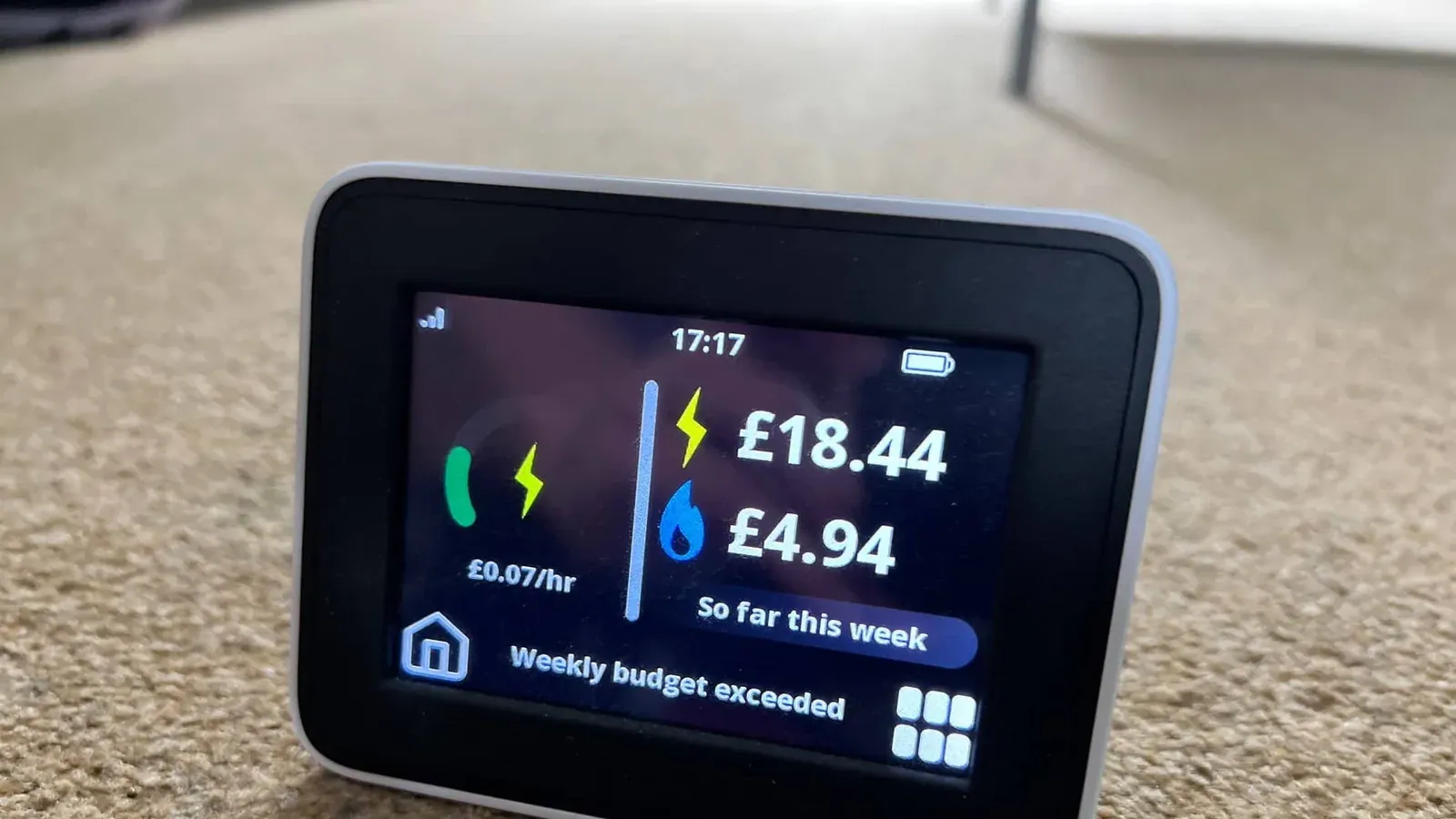
When your supplier installs a smart meter, they will also give you an In-Home Display. This is a small, portable screen that plugs into a standard plug socket and connects wirelessly to your meter. It shows your gas and electricity usage in near real-time.
Crucially, the screen shows your usage in pounds and pence, rather than just in kilowatt-hours. Watching the cost tick upwards when you boil the kettle or turn on an electric heater helps you understand exactly which appliances cost the most to run. Many displays also use a simple traffic light system, glowing green for low usage and red for high usage, making it easy to spot when you are wasting power.
Helping the national grid
Widespread use of smart meters helps the national energy grid forecast demand much more accurately. When the grid operators know exactly how much power homes are drawing at any given minute, they can manage the network better and integrate renewable energy sources, such as wind and solar, much more efficiently.
The downsides and technical trade-offs
While the technology works seamlessly for most homes, the rollout has faced well-documented technical hurdles. It is helpful to understand these trade-offs before you book an installation.
Connection drop-outs and dumb mode
Smart meters rely on a wireless network to send data. Just like a mobile phone, they can occasionally lose their signal. When this happens, the meter drops off the network and reverts to operating in traditional or 'dumb' mode. Your power supply is not affected, and the meter still accurately records your usage, but it can no longer send that data to your supplier.
As of early 2026, over 38 million smart meters were operating normally, but roughly 9% of all installed smart meters (around 3.4 to 3.5 million) were stuck in dumb mode. If your meter loses its connection, you will have to go back to submitting manual readings until your supplier fixes the fault. Under rules introduced in 2026, energy suppliers must ensure that any meter operating in dumb mode is fixed and returned to smart mode within 90 days of the fault being reported.
Legacy meter limits and future upgrades
The very first smart meters installed in the UK, known as SMETS1 meters, had a frustrating flaw: they often lost their smart functions if the household switched to a different energy supplier. The industry has spent years fixing this, and around 12 million of these older meters have now been upgraded remotely to keep their smart features when you switch.
However, another technical hurdle is approaching. Many older smart meters rely on 3G mobile networks and legacy communications technology that the telecommunications industry is phasing out. Energy suppliers are legally required to pre-emptively replace all these older communications hubs and SMETS1 assets by 2033 to keep them connected to the network.
You have to change your habits to save money
A common misconception is that simply having a smart meter on your wall will lower your bills. In reality, the meter itself does not save you a penny. It only gives you the data. To see a financial benefit, you have to use the information on your In-Home Display to actively change your habits, such as turning off appliances left on standby, taking shorter showers, or shifting your usage to cheaper times of the day.
Installation costs and new compensation rules
You do not have to pay an upfront fee to have a smart meter installed. However, the rollout is not entirely free. The initial infrastructure programme cost around £11 billion, and Citizens Advice estimated this would add a further £1 billion in costs over time. Suppliers recoup this money through the standing charges and unit rates paid by all consumers. This means every household contributes roughly £390 to the rollout over several years, whether they have a smart meter installed or not.
Because the government now treats smart meters as permanent national infrastructure rather than just a temporary rollout project, Ofgem introduced strict new Guaranteed Standards of Performance in February 2026. These rules are designed to protect you from poor service and long delays.
Under the 2026 rules, your supplier must pay you an automatic £40 compensation payment if they fail to meet specific standards. You will receive this £40 payment if:
- You report a fault with your smart meter and the supplier fails to give you a resolution plan within five working days.
- You ask for a smart meter and have to wait more than six weeks for an installation appointment.
- An engineer arrives to install a meter but the installation fails due to a fault on the supplier's side.
Privacy and data security
Because smart meters record exactly how much energy you use throughout the day, some consumers worry about data privacy. They fear that suppliers could use this data to track their daily habits, such as when they leave the house or go to sleep.
To address this, the system is highly regulated. Smart meters do not use the public internet to send your data. Instead, they use a dedicated, highly secure national network managed by the Data Communications Company (DCC). This closed network is designed specifically for energy data and operates under strict security standards.
Furthermore, the meter only transmits your energy usage readings. It does not send your name, address, bank details, or any other personal information. You also have control over how often your supplier collects your data. How often data is shared depends on when you had your meter installed or last switched supplier or agreed a new contract; many newer domestic customers share half-hourly data by default but can opt out to daily data.
Prepayment customers and RTS meter upgrades
If you pay for your energy in advance, getting a smart meter can make the process much easier. Traditional prepayment meters require you to take a key or card to a local shop to top up your credit, and then manually insert it into the meter. A smart prepayment meter allows you to top up your balance from your phone, via an app, or online, without leaving the house. You can also see exactly how much credit you have left on your In-Home Display.
There is also a pressing reason for some households to upgrade immediately. Homes that use the Radio Teleswitch Service (RTS) to manage multi-rate tariffs, such as Economy 7 or Economy 10, rely on long-wave radio signals to switch their heating on and off. This is the same radio signal used to broadcast BBC Radio 4.
The RTS signal has been switched off in phases since 30 June 2025. This particularly affects homes in the Scottish Highlands and Islands, as well as other rural areas. If you still have an RTS meter, contact your supplier promptly to arrange a suitable replacement, as heating, hot-water controls or off-peak switching may no longer work properly.
Final verdict
A smart meter is recommended for many households, especially if you want access to smart time-of-use tariffs that can offer cheaper off-peak electricity.
The transition to smart meters is a permanent shift in how the UK manages its energy. While connection faults still affect around 9% of meters, the new 2026 Ofgem rules provide financial protection and a strict 90-day repair window if things go wrong. For the vast majority of households, the system works well and completely removes the hassle of manual readings.
Crucially, if you want to lower your bills by shifting your energy use to cheaper times of the day, a smart meter is essential. Without one, you cannot access time-of-use tariffs, which are becoming the most effective way to cut household energy costs.
Frequently asked questions
Do I legally have to get a smart meter?
No, you are not legally required to have a smart meter installed. While the government requires energy suppliers to take all reasonable steps to offer one to every home by 2030, the choice to accept the upgrade remains entirely up to you.
Will my smart meter stop working if I switch suppliers?
If you have a newer second-generation (SMETS2) meter, it will stay fully functional when you switch suppliers. While some older first-generation (SMETS1) meters used to lose their smart features after a switch, around 12 million of these have now been upgraded remotely to fix the problem.
Do smart meters automatically cut my energy bills?
A smart meter does not reduce your bills just by being on the wall. It provides accurate data and ends estimated billing, but to save money, you must use the information on your display screen to actively reduce your energy use or shift it to cheaper times of the day.
What happens if my smart meter loses its connection?
If your meter loses its wireless connection, it will revert to operating as a traditional, 'dumb' meter. Your power supply will not be affected, but you will need to submit manual meter readings to your supplier until they fix the fault. Under 2026 rules, suppliers have 90 days to repair the connection once reported.
Related reviews and comparisons
Cosy Octopus prices
Cheap electricity in set blocks through the day, built around heat pumps.
Read more →Snug Octopus prices
A storage-heater tariff with a six-hour overnight cheap band and an Octopus-controlled afternoon boost.
Read more →Agile Octopus prices
Half-hourly electricity prices that follow the wholesale market, published a day ahead.
Read more →
E.ON Next Review
E.ON Next is the home energy brand of the wider E.ON group. It was set up to replace the older E.ON brand and npower after E.ON bought the company. Today, it is one of the UK's biggest domestic energy suppliers.
Read review →
Utilita Energy Review
Utilita Energy was founded in 2003 by Bill Bullen and is part of the Luxion Group. It has grown to become one of the UK's biggest independent domestic energy suppliers. The company specialises in smart Pay As You Go energy and was one of the first suppliers to install smart meters in Britain.
Read review →Related guides
Smart meter FAQs
Smart meters are the current standard for measuring household energy use in Great Britain. Unlike older traditional meters with spinning dials or digital displays that you have to read yourself, smart meters automatically send your gas and electricity readings straight to your supplier. This puts an
Read guide →
What is the average gas and electricity bill in the UK?
Energy bills remain a major part of household spending. Over the last few years, the cost of gas and electricity has seen massive changes, driven heavily by global events that affect the price suppliers pay for wholesale energy. For example, the Ofgem price cap rose by roughly 13% in July 2026, larg
Read guide →
Octopus Energy Refer a Friend Code – 2026
Octopus Energy runs one of the most popular refer-a-friend schemes in the UK energy market. While many suppliers stopped offering sign-up bonuses during the recent energy crisis, Octopus kept its scheme open. If you use a referral link from an existing customer to switch your gas or electricity, you
Read guide →
Written by
Rob Gibbs
Hi, I'm Rob, and I run Energy-Review.co.uk. I initially started this project in 2018 when I was looking to switch energy suppliers and found there wasn't a website that provided simple, data-backed reviews on all the suppliers available. Since then, I have spent a lot of time (too much, some may say!) looking at all publicly available data about each supplier and writing reviews using this information. These reviews are updated as regularly as possible, and any data is backed up by a source where necessary. I have also started writing guides on various energy-related topics, which hopefully you will find useful. If you find any issues, please use our contact form to let us know.