
SMETS1 SMETS2: What’s the difference?
If you have a smart meter in your home, it will belong to one of two main generations: SMETS1 or SMETS2.
Contents
- 1.Introduction
- 2.What is a SMETS1 smart meter?
- 3.What is a SMETS2 smart meter?
- 4.The main differences compared
- 5.The 2G and 3G switch-off
- 6.How to check which smart meter you have
- 7.Will you have to pay for an upgrade?
- 8.Why suppliers want you to have a smart meter
- 9.Privacy, data, and security concerns
- 10.What happens if your meter loses its connection?
- 11.FAQs
Introduction
If you have a smart meter in your home, it will belong to one of two main generations: SMETS1 or SMETS2. SMETS stands for Smart Metering Equipment Technical Specifications. The number simply tells you which generation of technology the meter uses.
For years, the main difference between the two was how they handled a change of energy supplier. Early smart meters often lost their smart features when a household switched to a new energy company, forcing people to go back to taking manual meter readings. Newer meters were built to fix this problem.
Today, the gap between the two generations has closed. A massive nationwide update programme has moved millions of older meters onto the same central network as the newer ones. At the same time, the UK's mobile networks are changing, which means some smart meter equipment is being upgraded to keep it connected.
Use our referral link, and we'll both get £50 credit once your switch is complete.
Existing customer? Find out how you can benefit too. T&Cs apply (only one switching offer per household)
What is a SMETS1 smart meter?
SMETS1 meters are the first generation of smart meters. The energy industry began testing them around 2011 and 2012, with a mass rollout to households starting in 2013. They were designed to end the need for manual meter readings and estimated bills by sending your gas and electricity usage directly to your supplier.
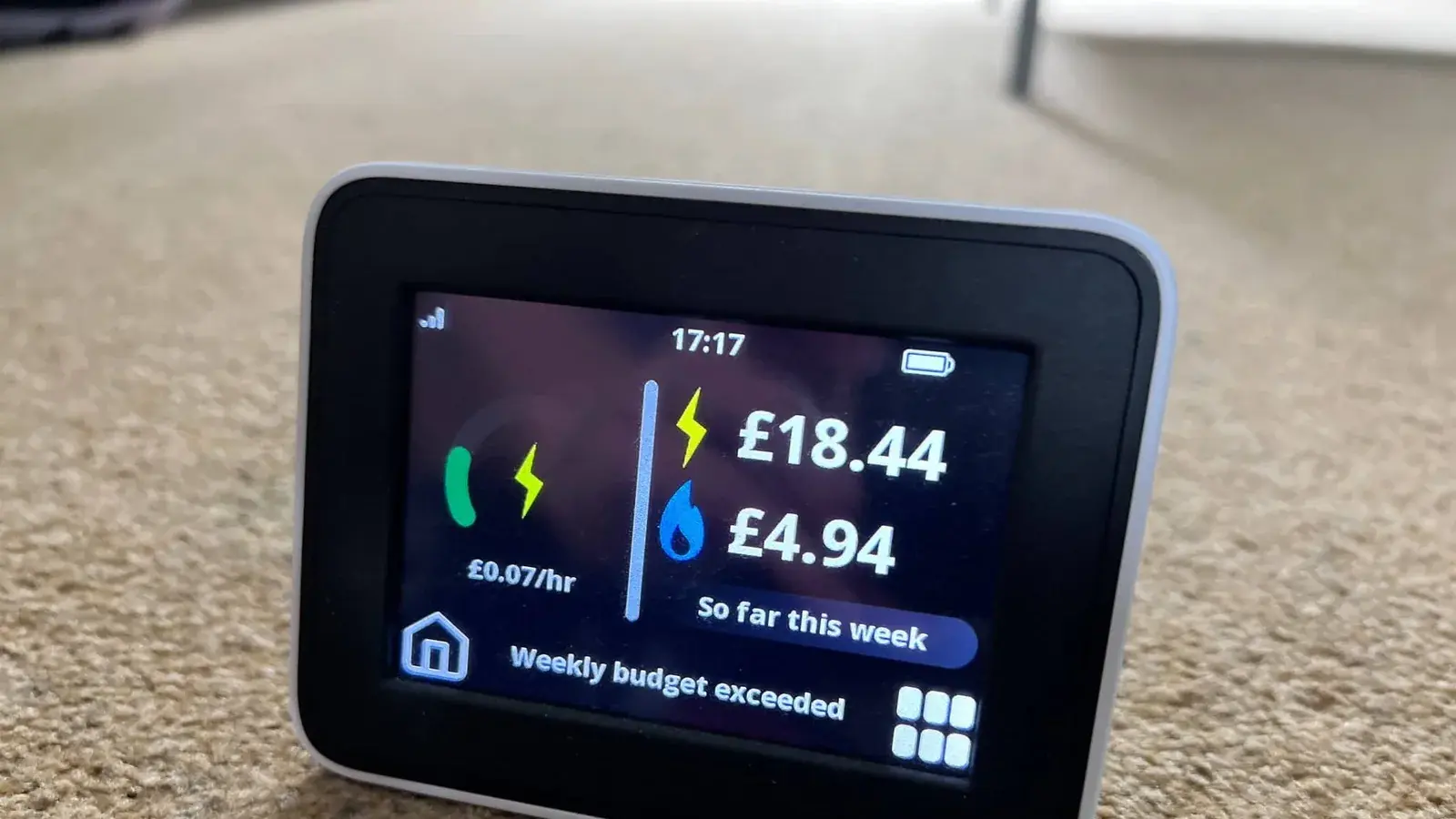
These early meters relied on 2G and 3G mobile networks to send data, using a SIM card similar to the one in a mobile phone. They also came with an In-Home Display, a small screen you plug in somewhere in your house, which shows you exactly how much energy you are using and what it costs in pounds and pence.
The main problem with SMETS1 meters was how they connected to energy suppliers. Because there was no central national network at the time, each energy supplier set up its own system and signed its own commercial contracts with mobile phone networks. The meters were programmed to talk directly to the specific supplier that installed them.
When a household switched to a different energy company, the new supplier usually could not access the old supplier's communication system. As a result, the meter lost its connection and went "dumb". It still recorded energy use safely and accurately, but the customer had to read the numbers on the front of the meter and type them into their new supplier's website to get an accurate bill.
To fix this, the government and the energy industry set up a programme to move all SMETS1 meters onto a single, secure national network. As of June 2026, around 11 million SMETS1 meters have been successfully migrated to this central system. If your SMETS1 meter has been migrated, it now works exactly like a newer meter and will stay smart even if you change suppliers.
What is a SMETS2 smart meter?
SMETS2 is the second generation of smart meters and the current standard for all new installations. The rollout of these newer models began in late 2018. As of mid-2026, there are about 27.3 million SMETS2 meters installed across the national network.
The major change with SMETS2 is that these meters were built from the start to connect to a single, secure national system managed by the Data Communications Company, or DCC. Instead of talking directly to one specific supplier, the meter sends its readings to the DCC network. Any energy supplier you choose to move to can then securely access your readings from that central network.
This means a SMETS2 meter will not lose its smart features when you switch energy companies. The process happens in the background, and your new supplier simply takes over receiving the automatic readings.
The way SMETS2 meters connect to the DCC network depends on where you live. In the Central and Southern regions of Great Britain, the network uses mobile signals. In the North of England and Scotland, it uses a Long-Range Radio network. This split was designed to ensure that meters in more rural or remote areas without strong mobile phone coverage could still connect and send data reliably.
The main differences compared
While they look similar on the wall and do the same basic job, the technology inside the two generations of meters is different. Here is how they compare in practice for a household.
| Feature | SMETS1 | SMETS2 |
|---|---|---|
| When were they installed? | Mostly between 2013 and early 2019. | From late 2018 to the present day. |
| Do they stay smart when you switch? | Yes, if migrated to the DCC network. No, if unmigrated. | Yes, they are designed to stay smart across all suppliers. |
| How do they send data? | Originally via 2G/3G mobile networks directly to suppliers. | Via the central DCC network (using mobile or radio signals). |
| Are they affected by the 3G/2G switch-off? | Yes, many rely on older mobile networks and need updates. | Some older hubs do, but newer ones use 4G or radio. |
The 2G and 3G switch-off
A major change affecting both generations of smart meters is the retirement of older mobile phone networks. UK mobile operators have been switching off their 3G networks, a process largely completed by 2025 and 2026 by networks like Vodafone, EE, and Three, with Virgin Media O2 following. The older 2G network is also scheduled to be completely retired by 2033.
Because millions of SMETS1 meters, and the communications hubs attached to many SMETS2 meters in the South and Central UK, rely on these 2G and 3G networks to send readings, the energy industry has to upgrade the hardware before the networks disappear completely.
To solve this, a mass deployment of 4G-compatible communications hubs is currently underway. These newer hubs future-proof the connection. If your meter relies on a network that is being switched off, Ofgem rules require your energy supplier to proactively upgrade your meter or its communication hub to keep it working in smart mode.
If you live in a mobile blackspot where neither 2G, 3G, nor 4G signals reach, your meter might struggle to connect. The industry is exploring other ways to keep these homes connected, such as virtual wide area networks that use a household's own broadband Wi-Fi to send the meter readings, though this is not yet standard everywhere.
How to check which smart meter you have
You do not need to wait on hold to ask your energy supplier which type of meter you have. You can find out quickly yourself using a few simple methods.
If you discover you have a SMETS1 meter, you do not need to do anything. If it has already been migrated to the DCC network, it will carry on working exactly like a newer model. If the migration failed or it has lost connection permanently, your supplier is responsible for sorting it out.
Will you have to pay for an upgrade?
A common worry is that upgrading an old, faulty, or disconnected SMETS1 meter to a new SMETS2 model will cost the household money. This is not true. Upgrading, replacing, or migrating a smart meter costs you £0 upfront.
Energy suppliers are obligated to maintain your metering equipment. If your SMETS1 meter is broken, failed to migrate to the central network, or is losing its connection because of the 3G switch-off, the supplier must replace it or fit a new 4G communications hub completely free of charge.
The overall cost of the national smart meter rollout, which runs into the billions, is not billed to individual households when the engineer visits. Instead, the cost is absorbed into general energy bills across the whole country, much like the cost of maintaining the pipes, wires, and pylons that deliver energy to your home.
Why suppliers want you to have a smart meter
Energy suppliers often contact customers to encourage them to book a smart meter installation. They do this because they are required to by the regulator, Ofgem. Suppliers must take "all reasonable steps" to complete the domestic smart meter rollout by the end of 2030. Annual milestones are binding from January 2027; those for 2026 are non-binding.[1]
Beyond government targets, suppliers also need smart meter data to run their businesses efficiently under new industry rules. Across 2025 and 2026, the energy industry has been rolling out a system called Market-wide Half-Hourly Settlement (MHHS).
Under MHHS, suppliers use actual half-hourly smart-meter data where it is available; where it is not, settlement uses estimates. This makes accurate, continuous data from your meter vital for them. It helps the energy network balance supply and demand more accurately, which is increasingly important as the country uses more renewable energy.
For households, a working smart meter is usually needed for time-of-use tariffs, which can offer cheaper electricity overnight or at other off-peak times. If you do not have one, your choice of these tariffs may be restricted.
Privacy, data, and security concerns
Some households are hesitant to accept a smart meter because of concerns over data privacy or fears that their energy could be cut off remotely. The rules governing smart meters are strict and heavily regulated by Ofgem to protect consumers.
Your smart meter measures how much energy you use, but it does not know which specific appliances you are running. Data privacy laws strictly protect this information. Your supplier can only use your detailed half-hourly usage data for marketing purposes, or share it with third parties, if you explicitly opt in and give them permission to do so. They can also use data where it is needed for regulated purposes, such as settlement and network operation. How often data is shared depends on when you had the meter installed or last switched supplier or agreed a contract.
As for remote disconnections, while smart meters do have the technical ability to disconnect a property's supply without an engineer visiting, the rules make it very difficult for suppliers to do this arbitrarily. Strict Ofgem regulations make it illegal for suppliers to disconnect vulnerable customers. Even for non-vulnerable customers in debt, suppliers must go through a long, heavily regulated process of support and warnings before any disconnection or forced switch to a prepayment meter can take place.
What happens if your meter loses its connection?
Sometimes a smart meter will lose its connection to the national network, either temporarily due to a mobile network fault, or permanently if an older SMETS1 meter failed to migrate properly when you switched suppliers.
If this happens, your energy supply will not be interrupted. The meter simply reverts to working like a traditional, analogue meter. It will continue to record your energy use accurately, but you will need to start taking manual readings and sending them to your supplier to avoid estimated bills.
Interestingly, even if the meter loses its wider connection to the supplier, your In-Home Display will usually keep working. This is because the meter and the display talk to each other using a local Home Area Network, which is separate from the mobile or radio network used to contact the energy company. You can still use the screen to track your daily usage, even if you have to type the numbers into your supplier's app at the end of the month.
Frequently asked questions
Can I refuse to have a smart meter installed?
Yes, having a smart meter is currently optional. You can decline the installation when your supplier contacts you. However, many of the cheapest tariffs on the market, especially time-of-use deals, require a smart meter to function.
Do I need an internet connection for a smart meter to work?
No, you do not need broadband or Wi-Fi. Smart meters communicate using their own secure network, which relies on mobile phone signals or Long-Range Radio, completely independent of your home internet connection.
Will my smart meter work if I live in a flat?
Usually yes, but it can be more complicated if your meters are kept in a communal basement or cupboard far from your actual flat. The signal between the meter and your In-Home Display might struggle to reach through multiple walls and floors, though the meter itself should still be able to send readings to your supplier.
Can I switch from a prepayment smart meter to a credit tariff?
Yes, and a smart meter makes this much easier. If you pass your supplier's credit checks, they can switch your meter from prepayment to credit mode remotely over the network, without needing to send an engineer to your home to change the physical meter.
What should I do if my In-Home Display breaks?
If your display screen breaks or goes blank, contact your energy supplier. If the unit is less than a year old, they will usually replace it for free. If it is older, they might charge a small fee for a replacement, or you can buy a compatible third-party display yourself.
Related reviews and comparisons
Octopus Energy vs So Energy
Octopus Energy centres its approach on technology and customer service. The company describes building its own technology to make energy simpler to manage. Its household business combines standard energy plans with choices that help customers change when they use electricity.
Read comparison →Octopus Energy vs Fuse Energy
Octopus Energy is part of Octopus Energy Group, whose work spans household energy, technology and renewable generation. Its broad approach is to link energy supply with changes in how homes use electricity, including moving demand away from busy periods. The group's generation business, Octopus Ener
Read comparison →
Utility Warehouse Review
Utility Warehouse was founded in 2002 and is owned by Telecom Plus PLC, a company set up in 1996. Based in London, it has grown to become one of the UK's biggest domestic energy suppliers.
Read review →
Utilita Energy Review
Utilita Energy was founded in 2003 by Bill Bullen and is part of the Luxion Group. It has grown to become one of the UK's biggest independent domestic energy suppliers. The company specialises in smart Pay As You Go energy and was one of the first suppliers to install smart meters in Britain.
Read review →Fuse Energy vs Scottish Power
Fuse Energy is a newer energy supplier set up in 2022 by former staff from the banking app Revolut. It is a smaller challenger brand that runs a vertically integrated model, meaning it owns renewable generation sites, trades on the wholesale market, and supplies homes directly. It aims to grow by of
Read comparison →Related guides
Pros and cons of smart meters
A smart meter replaces your traditional gas or electricity meter. Instead of waiting for you to read the numbers on the dial and send them in, a smart meter automatically sends your exact energy usage directly to your supplier. This fundamental change means you only pay for the energy you actually u
Read guide →
Smart meter FAQs
Smart meters are the current standard for measuring household energy use in Great Britain. Unlike older traditional meters with spinning dials or digital displays that you have to read yourself, smart meters automatically send your gas and electricity readings straight to your supplier. This puts an
Read guide →
How to avoid exit fees when you switch energy suppliers
Energy bills make up a large part of household spending. Following the July 2026 price cap increase of around 13%, Ofgem gives a typical annual Direct Debit bill of £1,862 using its existing typical-consumption values; its updated values give £1,663. Because of this rise, many people are looking to
Read guide →
Written by
Rob Gibbs
Hi, I'm Rob, and I run Energy-Review.co.uk. I initially started this project in 2018 when I was looking to switch energy suppliers and found there wasn't a website that provided simple, data-backed reviews on all the suppliers available. Since then, I have spent a lot of time (too much, some may say!) looking at all publicly available data about each supplier and writing reviews using this information. These reviews are updated as regularly as possible, and any data is backed up by a source where necessary. I have also started writing guides on various energy-related topics, which hopefully you will find useful. If you find any issues, please use our contact form to let us know.