
October 2026 Price Cap: New Rates and What They Mean for Your Bills
The typical dual-fuel Direct Debit bill will rise by 4% to £1,723 a year from 1 October 2026, though a temporary zero-VAT rate on electricity means gas users will see the biggest increases.
Contents
- 1.The October 2026 price cap explained
- 2.How unit rates and standing charges are changing
- 3.Why gas costs are driving the increase
- 4.Who will see their rates change?
- 5.Why you might have seen a £1,935 figure
- 6.How to estimate your own winter bills
- 7.Should you fix your energy tariff before winter?
- 8.What to do before 1 October
- 9.FAQs
The October 2026 price cap explained
If you are on a standard variable tariff, your rates will rise on 1 October. Fixing your tariff now offers price certainty for winter, but staying variable leaves you free to benefit if wholesale costs fall next year.
Ofgem announced on 26 August that the energy price cap will increase for the final three months of the year. From 1 October to 31 December 2026, a typical household paying by Direct Debit will see their annual dual-fuel bill rise from £1,663 to £1,723. This is an increase of £60 a year, or about £5 a month if these rates stayed the same for a full year.
The new cap replaces the current rates, which apply from 1 July to 30 September 2026. Around 22 million households in Great Britain are on standard variable tariffs and will be affected by this change. If you are one of the 11 million households on a fixed energy deal, your unit rates and standing charges will not go up, though you will still benefit from changes to electricity taxes.
It is important to understand that the price cap does not set a maximum limit on what you can be charged overall. It caps the cost of each unit of gas and electricity you use, as well as the daily standing charge. If you use more energy than the average household, your bills will be higher than the £1,723 headline figure. If you use less, your bills will be lower.[1]
Use our referral link, and we'll both get £50 credit once your switch is complete.
Existing customer? Find out how you can benefit too. T&Cs apply (only one switching offer per household)
How unit rates and standing charges are changing
Your energy bill is made up of two main parts. The unit rate is the amount you pay for the actual gas and electricity you use, measured in pence per kilowatt-hour (kWh). The standing charge is a fixed daily fee that covers the cost of supplying energy to your home, maintaining the grid, and funding government schemes. You pay the standing charge no matter how much energy you use.
From 1 October 2026, the average Direct Debit unit rate for electricity will rise slightly, while the daily standing charge will actually fall. For gas, both the unit rate and the standing charge will increase. These figures are averages for Great Britain. The exact amount you pay depends on where you live and how you pay your bill. Rates can differ by payment method, so compare the tariff available for your meter and how you pay.
| Fuel type | Current rate (Jul-Sep) | New rate (Oct-Dec) | Change |
|---|---|---|---|
| Electricity unit rate | 26.11p per kWh | 26.32p per kWh | Up 0.21p |
| Electricity standing charge | 57.19p per day | 54.83p per day | Down 2.36p |
| Gas unit rate | 7.33p per kWh | 7.97p per kWh | Up 0.64p |
| Gas standing charge | 29.04p per day | 29.68p per day | Up 0.64p |
Because the gas unit rate is rising much more sharply than the electricity unit rate, the impact on your wallet will depend heavily on how you heat your home. We explain the reasons for this difference in the next section.[1]
Why gas costs are driving the increase
The price cap is updated every three months to reflect the underlying costs of supplying energy. The main factor behind the 4% rise for October is the cost of buying energy on the wholesale market. Ofgem says wholesale gas prices have increased recently, driven largely by volatility linked to the ongoing conflict in the Middle East.
When global events make gas more expensive to buy, those costs eventually filter down to domestic energy bills. Because the UK still relies heavily on gas for home heating and electricity generation, a spike in wholesale gas prices has a direct impact on the price cap. However, a change in government tax policy means the October increase will affect gas and electricity bills very differently.
From 1 October 2026 to 31 March 2027, the government is cutting VAT on domestic electricity bills in Great Britain from 5% to 0%. VAT on gas will remain at its usual 5%. This temporary tax cut cancels out most of the wholesale price rise for electricity. As a result, typical electricity-only bills will rise by less than 1% under the new cap. In contrast, typical gas bills will rise by around 8%.
You do not need to apply for the electricity VAT cut. Your supplier will apply it automatically to your bill, whether you pay by Direct Debit, use a prepayment meter, or pay on receipt of your bill. This applies to all eligible households, including those on fixed tariffs.
Who will see their rates change?
The Ofgem price cap applies to standard variable tariffs, also known as default tariffs. If you have not actively switched to a new energy deal recently, or if your previous fixed deal ended and you did not choose a new one, you will be on a standard variable tariff. Around 22 million households fall into this group and will see their unit rates and standing charges change on 1 October.
If you are one of the 11 million households currently on a fixed-rate tariff, the price cap increase does not affect your agreed unit rates or standing charges. Your supplier cannot increase your core rates while you are in a fixed contract. However, because the electricity VAT cut applies to all domestic electricity bills, you will see the tax portion of your electricity bill drop to 0% from October, making your fixed deal slightly cheaper than originally quoted.
How you pay for your energy also plays a part. The £1,723 headline figure is based on a household paying by Direct Debit. If you pay by standard credit, which means paying the bill when it arrives in the post or online, your rates are usually higher. Prepayment meter rates are currently aligned closely with Direct Debit rates due to government support, but slight regional variations still exist. You can check your supplier's website or the Ofgem price cap data page to find the exact rates for your region and payment type.
Why you might have seen a £1,935 figure
You may see some reports mentioning an October price cap of £1,935, rather than £1,723. This difference is caused by the consumption benchmark used for the calculation, not by a second set of unit rates. Ofgem introduced lower Typical Domestic Consumption Values in July 2026 to reflect reduced household energy use.
To reflect this, Ofgem updated its Typical Domestic Consumption Values on 1 July 2026. The regulator lowered its estimate of typical annual electricity use from 2,700 kWh to 2,500 kWh, and typical gas use from 11,500 kWh to 9,500 kWh. The official £1,723 headline figure for October uses these new, lower consumption values.
If Ofgem still used the old, higher usage figures, the October cap would be £1,935. This is up from £1,862 under the July to September rates. While £1,935 is useful for comparing the new rates historically against caps from 2022 or 2023, it is not the official headline cap for average use today. When looking at news or supplier updates, £1,723 is the correct average figure to focus on.
How to estimate your own winter bills
Because the price cap is based on an average, it rarely matches what you will actually pay. A large, poorly insulated home with five people will pay much more than £1,723 a year, while a well-insulated flat with one person will pay less. To get a realistic idea of your costs from October, you need to look at your own usage.
You can use our energy bill calculator to get a quick estimate, or you can work it out yourself using a recent energy statement. Here is how to do it:
Remember to use the specific rates for your region and payment method if you want an exact figure, as the numbers above are national Direct Debit averages.
Should you fix your energy tariff before winter?
With prices rising in October, many households are wondering if they should lock in a fixed tariff now. A fixed tariff guarantees your unit rates and standing charges for a set period, usually 12 months. This protects you if the price cap goes up again in January 2027, giving you peace of mind over the coldest months of the year.
When comparing a fixed deal, use a personalised quote and compare its exact unit rates and standing charges with the October rates for your region and payment method. Check the contract length and exit fees too. An estimated annual cost is only comparable when both quotes use the same household consumption.
On the other hand, fixing comes with trade-offs. If wholesale gas prices drop unexpectedly early next year, a later Ofgem price cap could fall. If you are locked into a fixed deal, you will not benefit from lower rates unless you leave the contract. Any exit fee can reduce or wipe out the saving from switching.
Staying on a standard variable tariff means you accept the 4% rise in October, but you keep the flexibility to switch without penalty later if cheaper deals appear. You can check our price cap data pages to monitor market trends before making a decision.
What to do before 1 October
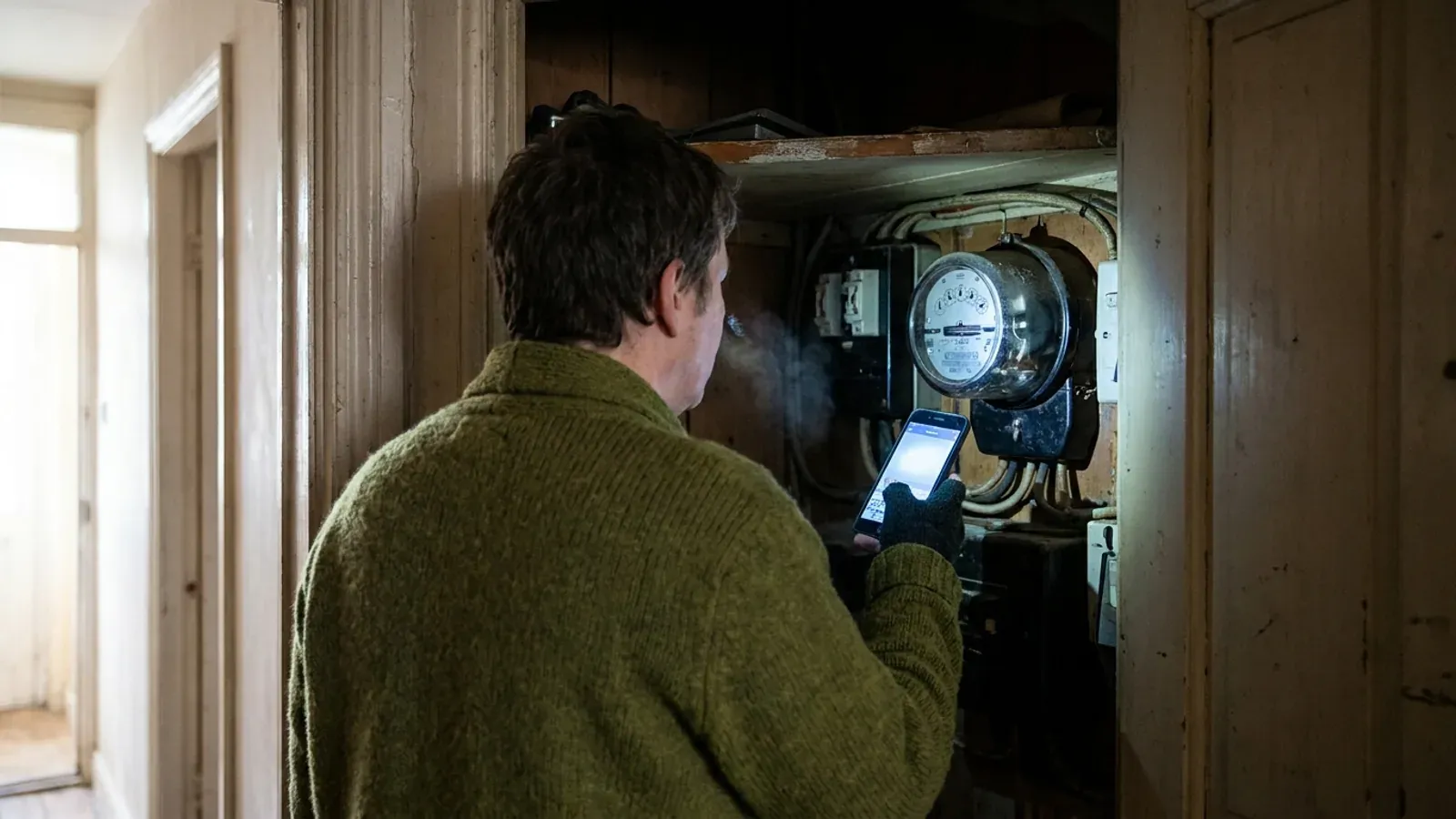
If you are on a standard variable tariff and do not have a smart meter, you should submit a manual meter reading to your supplier on or around 30 September. This draws a clear line under your account before the new rates begin.
If you do not provide a reading, your supplier will estimate how much energy you used in September and how much you used in October. If their estimate is wrong, you could end up being charged the new, higher October rates for energy you actually used in September when it was cheaper.
Now is also a good time to check your home for basic energy efficiency improvements. Small changes, like bleeding your radiators, checking your boiler pressure, and blocking draughts around doors and windows, can help offset the October price rise by reducing the amount of gas you need to keep your home warm.
Fixing your tariff protects you from winter price shocks, but staying variable leaves you free to move without penalty.
Choosing whether to fix depends on how much you value certainty. Compare the fixed deal’s unit rates and standing charges with the October cap rates for your region using the same consumption estimate. A competitive fix can make winter budgeting more predictable, but the £1,723 national headline alone is not enough to judge a tariff.
However, if you lock in now, you might miss out on savings if global wholesale costs drop next year. If you prefer flexibility and do not mind the risk of prices fluctuating, staying on a variable tariff avoids expensive exit fees.
Frequently asked questions
Is the £1,723 price cap the absolute maximum I will pay?
No. The price cap limits the amount you pay for each unit of energy and the daily standing charge, not your final bill. If you use more energy than the typical household, your bill will be higher than £1,723. If you use less, it will be lower.
Will the VAT cut lower my whole energy bill?
No, the temporary 0% VAT rate only applies to electricity. Gas remains subject to the standard 5% VAT rate. Because gas is used for most home heating, households relying on gas central heating will still see their overall bills rise in October.
Do I need to apply for the electricity VAT cut?
No, you do not need to do anything. Your energy supplier will automatically apply the 0% VAT rate to your electricity bills from 1 October 2026 to 31 March 2027. This happens regardless of how you pay or what tariff you are on.
Does the price cap apply to fixed tariffs?
No, the price cap only applies to standard variable tariffs (also known as default tariffs). If you are on a fixed-rate deal, your unit rates and standing charges are locked in and will not rise just because the price cap has gone up.
Why are standing charges changing?
Standing charges cover the fixed costs of supplying energy, maintaining the grid, and running government schemes. For October 2026, Ofgem has adjusted these costs, resulting in a slight drop for the electricity standing charge and a slight rise for the gas standing charge.
Does the price cap apply in Northern Ireland?
No, the Ofgem price cap only applies to households in Great Britain (England, Scotland, and Wales). Northern Ireland operates under a different energy market and regulatory system with its own pricing rules.
Related reviews and comparisons
British Gas vs Outfox Energy
British Gas is owned by Centrica and is one of the UK's oldest and largest domestic energy suppliers. It offers a wide range of energy tariffs alongside home services like boiler cover, heating repairs, and Hive smart home devices. A key feature is its PeakSave scheme, which gives customers with sma
Read comparison →Octopus Go prices
A cheap overnight electricity rate for a fixed window, with a higher day rate.
Read more →Prime Outgoing Octopus prices
A fixed-term export tariff that pays a higher rate from 4pm to 7pm and a lower rate at other times.
Read more →Octopus Energy tariff price changes
A dated record of unit-rate and standing-charge changes across Octopus Energy tariffs, taken from the published prices.
Read more →Scottish Power vs Tulo Energy
Scottish Power is one of the UK's largest domestic energy suppliers. It started in 1990 and is now owned by the Spanish energy group Iberdrola. The company offers standard energy supply as well as solar panels, home batteries, electric vehicle chargers, and boiler care plans. It also runs a long-sta
Read comparison →Related guides
Energy Price Cap Predictions
Energy bills are set to change again as we head into the colder months. The regulator, Ofgem, reviews the price cap every three months to reflect the cost of buying energy on the wholesale market. For the period between 1 July and 30 September 2026, the cap sits at £1,663 a year for a typical dual-f
Read guide →
Average Gas & Electricity Prices per kWh (2026)
Energy prices play a huge part in managing a household budget. Knowing the average cost of gas and electricity helps you understand your own bills, check if you are paying a fair rate, and decide whether you should switch to a different tariff. The rates you pay depend on the wholesale cost of energ
Read guide →
Average Gas and Electricity Bill for a Three Bed House (2026)
If you live in a three-bedroom house, you might wonder if your energy bills are normal or if you are paying too much. For comparison purposes, this guide uses Ofgem's medium-consumption benchmark of 2,500 kWh of electricity and 9,500 kWh of gas a year. This usually describes a property with two or t
Read guide →
Written by
Rob Gibbs
Hi, I'm Rob, and I run Energy-Review.co.uk. I initially started this project in 2018 when I was looking to switch energy suppliers and found there wasn't a website that provided simple, data-backed reviews on all the suppliers available. Since then, I have spent a lot of time (too much, some may say!) looking at all publicly available data about each supplier and writing reviews using this information. These reviews are updated as regularly as possible, and any data is backed up by a source where necessary. I have also started writing guides on various energy-related topics, which hopefully you will find useful. If you find any issues, please use our contact form to let us know.