
Air source Ground source heat pumps
If you are looking to replace your heating system, a heat pump is one of the most efficient options available.

Contents
- 1.Air source vs ground source heat pumps: Overview
- 2.How air source heat pumps work
- 3.How ground source heat pumps work
- 4.Comparing the key differences
- 5.Upfront costs and government grants
- 6.Hidden costs: Radiators, underfloor heating, and electricals
- 7.Installation process and disruption
- 8.Efficiency and winter performance
- 9.Running costs and bill savings
- 10.Planning permission and noise rules
- 11.Which homes suit which system?
- 12.FAQs
Air source vs ground source heat pumps: Overview
If you are looking to replace your heating system, a heat pump is one of the most efficient options available. Unlike traditional gas or oil boilers that burn fuel to create heat, heat pumps move existing heat from the outside environment into your home. Because they transfer heat rather than generating it from scratch, they use far less energy than they produce.
When you decide to install a heat pump, your main choice is between an air source system and a ground source system. Both use the same basic technology, but they collect their heat from different places. This single difference changes how much the system costs, how difficult it is to install, and how much space you need outside your property.
Choosing the right option depends on your budget, the size of your garden, and what kind of heating fuel you currently use. This guide explains how both systems work, breaks down the typical costs and government grants available, and helps you decide which type makes the most sense for your home.
Air source heat pumps suit most UK homes due to lower upfront costs and simpler installation, while ground source systems are best for properties with large gardens and the budget to cover heavy groundworks.
Use our referral link, and we'll both get £50 credit once your switch is complete.
Existing customer? Find out how you can benefit too. T&Cs apply (only one switching offer per household)
How air source heat pumps work
An air source heat pump looks similar to a large air conditioning unit. It sits outside your property, usually mounted on a wall or placed on the ground next to your house. Its job is to take heat from the outside air and boost it to a temperature high enough to warm your home and your hot water.
The unit contains a fan that draws outside air over a network of tubes filled with a special refrigerant fluid. This fluid is extremely sensitive to temperature, meaning it turns into a gas even when the outside air is cold. A compressor then squeezes this gas, which forces its temperature to rise significantly. This concentrated heat is passed into your home's heating system to warm your radiators or underfloor heating, before the refrigerant cools down and the cycle starts again.
The most common type in the UK is an air-to-water heat pump, which links up to your standard wet central heating system (radiators and a hot water cylinder). However, you can also get air-to-air heat pumps. These blow warm air directly into your rooms through wall-mounted units, much like an air conditioning system running in reverse. Air-to-air systems cannot heat your hot water taps, so you would need a separate solution for baths and showers.
Because they draw heat from the air, air source heat pumps are slightly less efficient in the middle of winter when the air is freezing. However, modern units are designed to work perfectly well even in sub-zero temperatures, drawing enough ambient heat from the air to keep a well-insulated house warm.
How ground source heat pumps work
A ground source heat pump uses the same compression cycle as an air source model, but it gathers its heat from the earth instead of the air. Just a metre or two below the surface, the ground temperature in the UK stays relatively constant all year round, usually hovering between 10°C and 12°C. This gives the heat pump a stable, reliable source of warmth, even during the coldest winter months.
To collect this heat, installers must bury a long loop of plastic pipework in your garden. A mixture of water and antifreeze is pumped through this loop. As the fluid travels through the underground pipes, it absorbs the natural heat from the earth. It then returns to the heat pump unit inside your home, where a compressor boosts the temperature to heat your radiators and water cylinder.
There are two ways to install the underground pipework. The first is a horizontal ground loop, where the pipes are laid in shallow trenches about a metre deep. This is the cheapest method, but it requires a very large amount of clear outdoor space — often two or three times the total floor area of your house.
If you do not have enough space for horizontal trenches, the alternative is a vertical borehole. Installers use heavy drilling machinery to bore a hole straight down into the earth, often reaching depths of 50 to 100 metres. The pipe is then fed down the hole. While this takes up very little surface space in your garden, the specialist drilling makes it a much more expensive process.
Comparing the key differences
While both systems achieve the same end result, the practical realities of fitting and running them are very different. Air source systems are the default choice for most standard residential streets, while ground source systems are usually reserved for large rural properties, self-build projects, or major renovations.
| Feature | Air Source Heat Pump | Ground Source Heat Pump |
|---|---|---|
| Average upfront cost (before grants) | £12,500 | £21,000 |
| Typical efficiency | 250% to 350% | 300% to 400%+ |
| Outdoor space needed | Small area near an external wall | Large garden for trenches or access for a drill rig |
| Installation time | 1 to 3 days | Around 6 working days |
| Disruption level | Low (mostly plumbing and electrical) | High (heavy groundworks and landscaping) |
| Visual impact | Unit is visible outside the home | Pipework is hidden underground |
The table above highlights the main trade-offs. You pay a heavy premium for a ground source system, both in money and in the disruption to your garden. In return, you get a system that is entirely hidden from view and runs slightly more efficiently, which lowers your monthly heating bills.
Upfront costs and government grants
Heat pump installations are priced on a case-by-case basis. The final bill depends heavily on the size of your property, how much heat you need, and how complex the pipework is. However, average market figures give a clear picture of the price gap between the two technologies.
To help households manage these high upfront costs, the government offers financial support through the Boiler Upgrade Scheme (BUS). Administered by Ofgem, this scheme currently provides a flat £7,500 grant towards the cost of an air source or ground source heat pump in England and Wales. You do not need to claim this money yourself; an MCS-certified installer will apply for the grant and deduct the £7,500 directly from your invoice.
With the standard £7,500 grant applied, the out-of-pocket cost for a typical air source heat pump falls to roughly £500 to £8,500. Ground source installation costs vary substantially, particularly where boreholes or enabling works are needed, so ask for an itemised quote rather than relying on a typical net range. The scheme has been extended to 2029/30, backed by approximately £2.7 billion in funding under the government's Warm Homes Plan.[1]
Recent rule changes have made the grant easier to access. As of 28 April 2026, you no longer need a valid Energy Performance Certificate (EPC) with no outstanding insulation recommendations to apply. On the same date, the scheme was expanded to offer a £2,500 grant for air-to-air heat pumps. However, the April 2026 rules also strictly excluded hybrid systems (where a heat pump is paired with a traditional fossil fuel boiler) from receiving the £7,500 grant.[2]
Installation process and disruption
The installation process is where the two systems differ most. Fitting an air source heat pump is a relatively straightforward plumbing and electrical job. Assuming you have a suitable spot outside and a place for the hot water cylinder inside, a team can usually complete the work in one to three days. The disruption is similar to having a new boiler fitted, with minimal impact on your garden.
Installing a ground source heat pump is a major construction project. A standard installation takes around 6 working days, and the level of disruption to your property is significant. If you choose a horizontal loop system, a team with a mechanical digger will need to excavate large, shallow trenches across your lawn. If you choose a vertical system, a specialist drill rig must be driven onto your property to bore deep into the ground.
Once the ground source system is in place, all the outdoor pipework is completely hidden. However, homeowners must factor in the cost, time, and effort of re-turfing or landscaping the garden afterwards, which is rarely included in the installer's quote.
Efficiency and winter performance
Both types of heat pump are incredibly efficient compared to traditional heating. A brand-new gas boiler operates at about 90% to 94% efficiency, meaning it turns roughly 90% of the gas it burns into useful heat, while the rest is lost as waste gases out of the flue.
Heat pumps operate above 100% efficiency because they move heat rather than creating it. An air source heat pump typically operates at around 250% to 350% efficiency. This means that for every 1 unit of electrical energy it uses to run the compressor, it delivers roughly 2.5 to 3.5 units of heat into your home. A 2026 analysis by HeatPumpMonitor.org showed that well-designed air source heat pumps achieve a high average Seasonal Performance Factor (SPF) of around 3.86 over the course of a year.
Ground source heat pumps boast even higher efficiencies, typically sitting at approximately 300% to 400%+. Because the ground stays at a steady 10°C to 12°C all winter, the pump does not have to work as hard to extract heat. An air source pump, by contrast, has to work slightly harder when the outside air drops below freezing.
Despite this, the idea that air source heat pumps fail in cold weather is a myth. Real-world data contradicts it heavily. A 2026 survey by Octopus Energy, conducted during a severe cold snap, found that approximately 85% of heat pump owners were satisfied with their system's cold-weather performance. In contrast, only around 80% of gas boiler users reported being satisfied during the same period.
Running costs and bill savings
Because a ground source heat pump is more efficient, it will use less electricity than an air source model to generate the exact same amount of heat. Over the course of a year, this gives ground source systems the edge on running costs.
However, whether a heat pump saves you money overall depends on what heating fuel you are moving away from. Electricity is significantly more expensive per unit than natural gas. Even though a heat pump uses three to four times less energy than a gas boiler, the higher price of electricity means your running costs might stay roughly the same if you switch from mains gas. You will need a highly efficient system and a dedicated heat pump energy tariff to see noticeable savings on your monthly bills.
Off-grid homes may have greater scope to save, especially when replacing LPG or electric storage heating, but savings are not guaranteed: they depend on system design, heat demand and the electricity tariff. The temporary £9,000 grant uplift is specifically for eligible off-gas-grid homes replacing oil or LPG.[1]
Planning permission and noise rules
In England, an air source heat pump will often be permitted development, so formal planning permission is not normally needed. Since May 2025, the previous one-metre boundary rule no longer applies in England, but size, siting and noise requirements still apply. Planning rules differ in Scotland, Wales and Northern Ireland, and listed buildings or protected areas may need additional consent, so check with your local planning authority.
Noise is a practical factor to consider with air source systems. The fan and compressor make a continuous humming sound when running, similar to a modern fridge or an air conditioning unit. While they are not overly loud, you should place the unit away from bedroom windows and consider how the noise might affect your neighbours.
Ground source heat pumps are generally easier to get past planning regulations because the heat-collecting pipework is entirely hidden underground. The indoor unit, which is roughly the size of a large fridge-freezer, does make a low-level hum, but it is contained inside your utility room or garage. From January 2026, Ofgem also began regulating heat networks, meaning if you share a ground loop system with neighbours, the operator must comply with strict consumer protection and performance standards.
Which homes suit which system?
Not every home is suited to both technologies. Industry experts note that homes often labelled as "never suitable" for a heat pump are usually just highly inefficient properties that need better insulation, rather than a failure of the heat pump technology itself. To get the best out of either system, your home needs to be well-insulated with good double glazing and loft insulation.
The government is also pushing the wider heating industry to adapt. Under the Clean Heat Market Mechanism (CHMM), qualifying boiler manufacturers must obtain heat-pump credits linked to their relevant fossil-fuel boiler sales. This is a manufacturer obligation, not a requirement for householders.
For the vast majority of UK households, an air source heat pump is the most practical and cost-effective choice.
Air source heat pumps deliver excellent efficiency with a much lower upfront cost and a far simpler installation process. With the £7,500 Boiler Upgrade Scheme grant applied, the final cost is within reach for many homeowners, making it the clear winner for standard properties in towns and cities.
Ground source heat pumps are brilliant feats of engineering that offer stable, ultra-efficient heating. However, the sheer cost and disruption of the groundworks mean they only truly make sense for self-builds, major renovations, or large off-grid properties where the land is already being dug up.
Frequently asked questions
Are gas boilers being banned immediately?
No. There is no ban on existing gas boilers in UK homes. You can continue to use, repair, and replace your current gas boiler where it is suitable. The government is simply offering heavy financial incentives to encourage households to choose lower-carbon alternatives.
Can I get a grant for a hybrid heat pump?
No. Following a rule change on 28 April 2026, hybrid systems — which combine a heat pump with a traditional fossil fuel boiler — are strictly ineligible for the £7,500 Boiler Upgrade Scheme grant.
Do I need an EPC to get the heat pump grant?
No. As of April 2026, the requirement to have a valid Energy Performance Certificate (EPC) with no outstanding loft or cavity wall insulation recommendations has been removed from the Boiler Upgrade Scheme.
What is the off-gas grid uplift?
It is a temporary increase to the standard Boiler Upgrade Scheme grant. From 21 July 2026 until 31 March 2027, eligible off-grid properties replacing heating oil or LPG can receive a £9,000 grant instead of the standard £7,500.
Do heat pumps work in cold weather?
Yes. While they have to work slightly harder when temperatures drop, modern heat pumps are designed to run efficiently in sub-zero conditions. A 2026 Octopus Energy survey found that 85% of heat pump owners were satisfied with their system's performance during a cold snap.
Will a heat pump increase my electricity bill?
Yes, your electricity usage will go up because the heat pump runs on electricity. However, if you are replacing a gas or oil boiler, you will no longer be paying for that fuel, which offsets the higher electricity costs.
Related reviews and comparisons
What Heat Pumps Actually Achieve in Real British Homes
Measured efficiency from hundreds of monitored British heat pumps, by what the meters covered and by flow temperature
Read more →Compare heat-pump tariffs using real prices
Dedicated heat-pump tariffs from supported supplier APIs, compared for one region and the same whole-year heat-pump profile.
Read more →Cosy Octopus prices
Cheap electricity in set blocks through the day, built around heat pumps.
Read more →Snug Octopus prices
A storage-heater tariff with a six-hour overnight cheap band and an Octopus-controlled afternoon boost.
Read more →ECO and Insulation Grants by Area
ECO and the now-closed Great British Insulation Scheme by local authority, with measures and households kept separate and the Great Britain insulation stock shown alongside them
Read more →Related guides

What are air source heat pumps?
An air source heat pump is a low-carbon way to heat your home. It sits outside your property and absorbs natural heat from the air, which it then uses to warm your rooms and your hot water cylinder. They look a bit like standard air conditioning units and come in different sizes based on how much he
Read guide →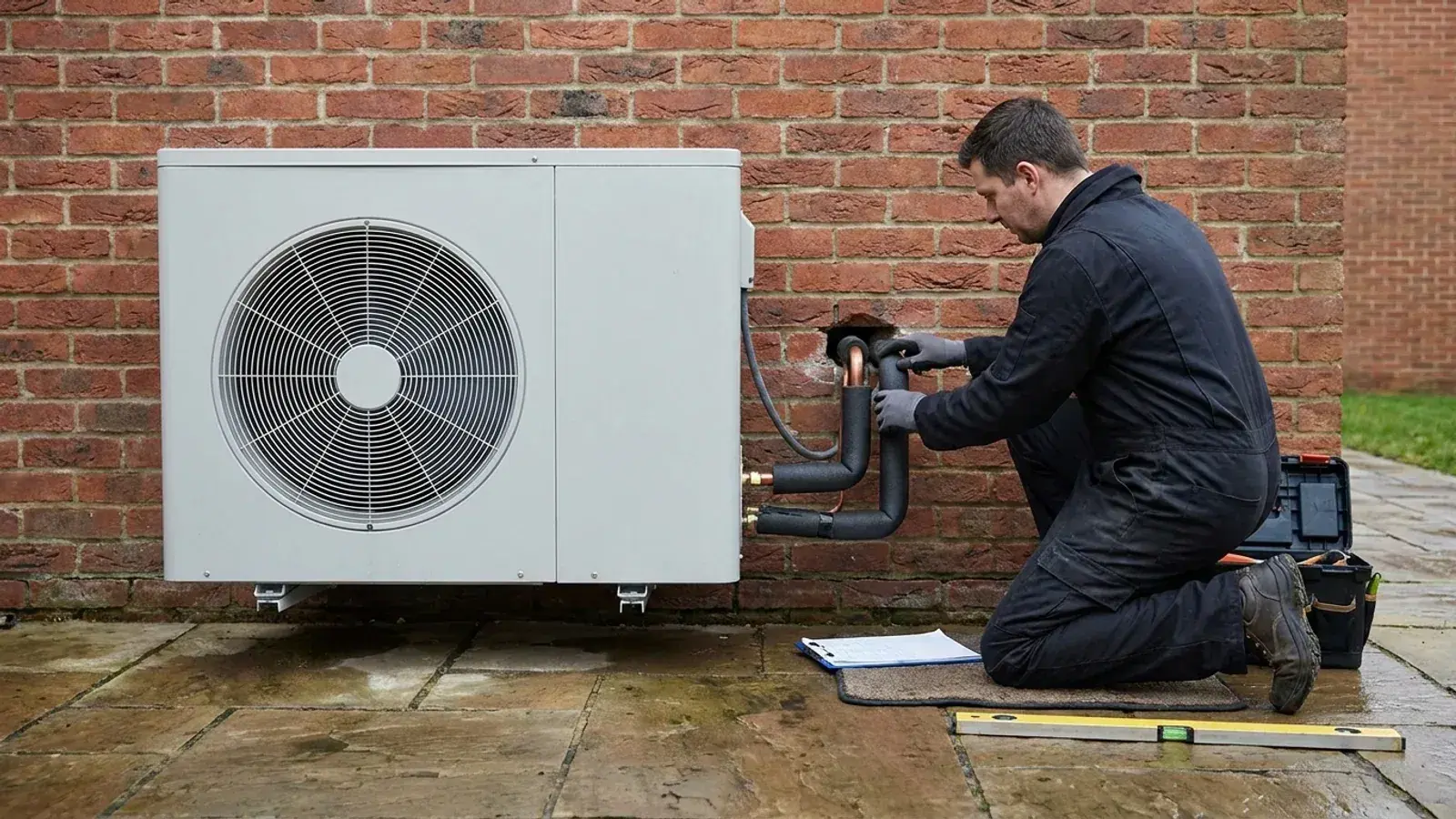
How to get an Octopus Energy heat pump (2026)
Replacing a gas boiler with an air source heat pump is one of the most effective ways to cut your carbon footprint. As the UK moves away from fossil fuels, heat pumps have become the standard replacement for traditional heating systems. Octopus Energy has expanded heavily into this area, shifting fr
Read guide →
Average Gas and Electricity Bill for a Three Bed House (2026)
If you live in a three-bedroom house, you might wonder if your energy bills are normal or if you are paying too much. For comparison purposes, this guide uses Ofgem's medium-consumption benchmark of 2,500 kWh of electricity and 9,500 kWh of gas a year. This usually describes a property with two or t
Read guide →
Written by
Rob Gibbs
Hi, I'm Rob, and I run Energy-Review.co.uk. I initially started this project in 2018 when I was looking to switch energy suppliers and found there wasn't a website that provided simple, data-backed reviews on all the suppliers available. Since then, I have spent a lot of time (too much, some may say!) looking at all publicly available data about each supplier and writing reviews using this information. These reviews are updated as regularly as possible, and any data is backed up by a source where necessary. I have also started writing guides on various energy-related topics, which hopefully you will find useful. If you find any issues, please use our contact form to let us know.