
How to get an Octopus Energy heat pump (2026)
Replacing a gas boiler with an air source heat pump is one of the most effective ways to cut your carbon footprint.
Contents
- 1.Introduction
- 2.What is an Octopus Energy heat pump?
- 3.How much does an Octopus heat pump cost?
- 4.Running costs and the Cosy Octopus tariff
- 5.What does the installation include?
- 6.Is your home suitable for a heat pump?
- 7.The installation process: step by step
- 8.Do you need to be an Octopus energy customer?
- 9.Trade-offs to consider
- 10.FAQs
Introduction
Replacing a gas boiler with an air source heat pump is one of the most effective ways to cut your carbon footprint. As the UK moves away from fossil fuels, heat pumps have become the standard replacement for traditional heating systems. Octopus Energy has expanded heavily into this area, shifting from installing third-party units to building and fitting its own hardware.
The company now offers a complete package. This includes the heat pump unit, a new hot water cylinder, room sensors, and a dedicated energy tariff to run it all. Because Octopus manages the entire process from manufacturing to installation, the costs are often lower than the national average.
An Octopus heat pump is a strong option if you have the outdoor space and want a straightforward installation, though you will need to switch to their smart tariff to get the best running costs.
Use our referral link, and we'll both get £50 credit once your switch is complete.
Existing customer? Find out how you can benefit too. T&Cs apply (only one switching offer per household)
What is an Octopus Energy heat pump?
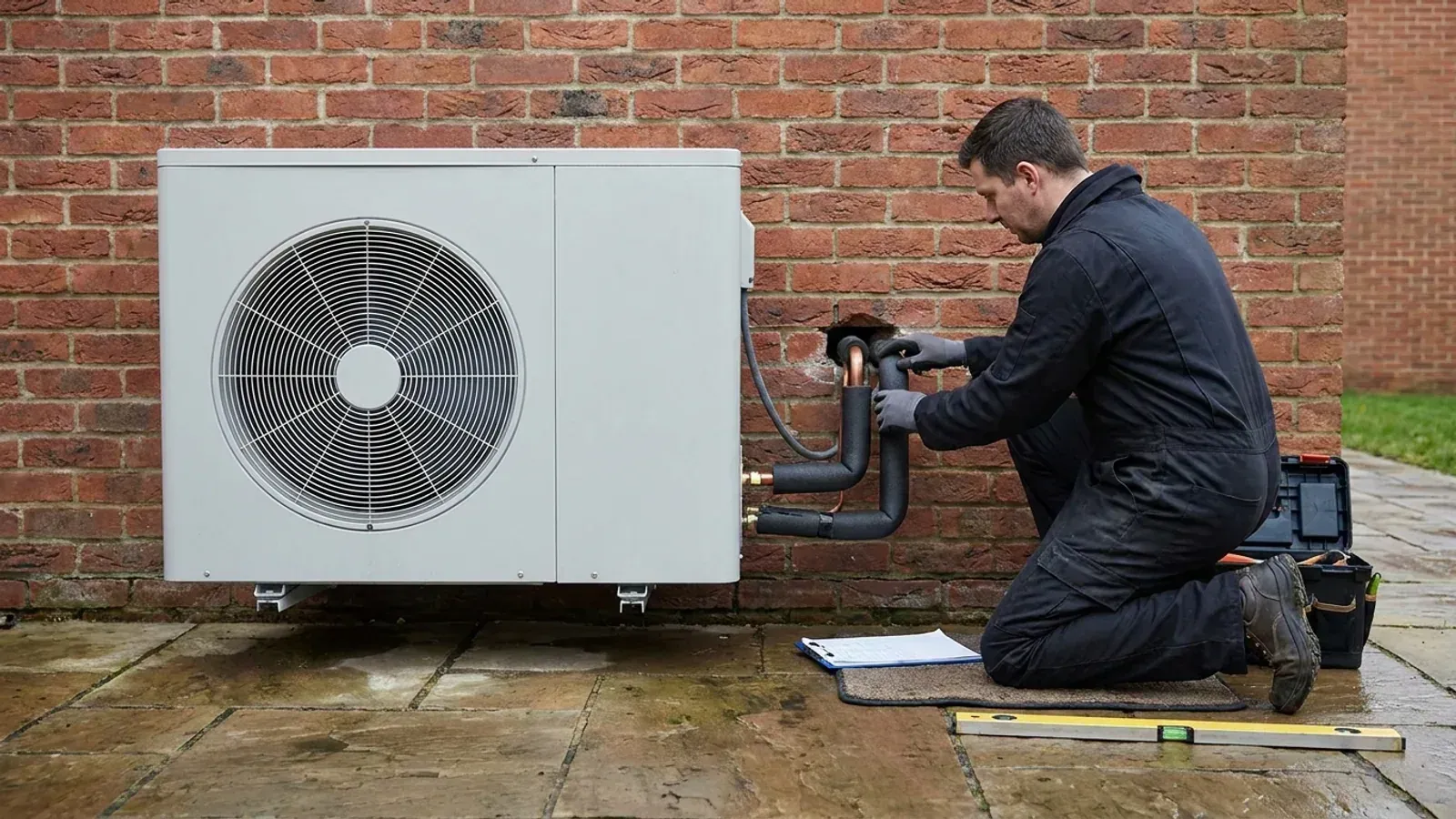
A heat pump works by taking warm air from outside, compressing it to increase the temperature, and transferring that heat to the water flowing through your radiators. It does this without burning any fuel. Even on cold days, there is enough heat in the outside air for the pump to work effectively.
Octopus currently focuses entirely on air source heat pumps. Ground source heat pumps, which take heat from the earth, are not available through this service. The company builds its own units in Northern Ireland. The Cosy range includes the Cosy 6, Cosy 9 and Cosy 12. Octopus selects the appropriate model after assessing your home's heat loss.
Heat pumps are highly efficient. Over a full year, the Seasonal Coefficient of Performance averages between 3.0 and 4.0. This means for every unit of electricity you put in, you get three to four units of heat out. By comparison, a good gas boiler is around 85% to 90% efficient, meaning you lose some heat for every unit of gas burned.
The Octopus setup is an ecosystem. Along with the pump, you get a highly insulated hot water cylinder and Cosy Pods. These pods are wireless room sensors that talk to the main system, helping it maintain a steady temperature across different parts of your house.
How much does an Octopus heat pump cost?
The cost of installing a heat pump varies depending on the size of your home and the complexity of the work. However, the median price for an Octopus Energy installation is £4,459. This figure is based on quotes issued between September 2025 and February 2026. It already includes the standard government grant deduction. For comparison, the UK national average cost for a heat pump installation is currently around £5,600.
The price is heavily subsidised by the Boiler Upgrade Scheme. Administered by Ofgem, this scheme gives a standard £7,500 upfront grant towards an air source heat pump in England and Wales. You do not have to claim this yourself. Octopus applies for the grant on your behalf, so you only pay the net amount shown on your quote. Government has allocated funding for the Boiler Upgrade Scheme through the 2029/30 financial year.
If your home is heated by oil or LPG and has no mains gas connection, the financial help is currently higher. From 21 July 2026, eligible households can receive a £9,000 grant towards an air-to-water heat pump. This targeted uplift runs until 31 March 2027.
Running costs and the Cosy Octopus tariff
While heat pumps are very efficient, they run on electricity. Electricity is much more expensive per unit than gas. For example, on standard variable tariffs like the Flexible Octopus, electricity costs around 25p per kWh, while gas is roughly 7p per kWh. Even with a heat pump producing three units of heat for every unit of electricity, running it on standard rates can cost a similar amount to running a gas boiler.
To see real savings, you need to use a smart energy tariff. Octopus offers a dedicated tariff called Cosy Octopus. This tariff gives you three off-peak periods each day where electricity is much cheaper. The idea is to heat your home slightly more during these cheap windows, so the pump does not have to work as hard during the expensive peak times between 4 pm and 7 pm. This practice is known as load shifting.
By shifting when they use energy, households can cut their bills. Octopus reports that customers using the Cosy Octopus tariff saved an average of £224 over the past year (between July 2025 and July 2026) compared to running an 85% efficient gas boiler on a standard variable tariff.
What does the installation include?
When you pay for an Octopus heat pump, the price covers the entire transition from your old heating system to the new one. The package includes the home survey, the removal of your existing boiler, and the supply of the new hardware.
Your installation package includes:
- A Cosy 6, Cosy 9 or Cosy 12 air source heat pump unit.
- A new, highly insulated hot water cylinder to store your hot water.
- Cosy Pod room sensors to monitor and adjust temperatures.
- All necessary copper pipework and cabling to connect the system.
- A full system flush to clear out sludge and debris from your existing pipes.
- The labour time to fit and test the new system.
The hardware comes with different warranty lengths. Octopus provides an 8-year product warranty for its Cosy heat pumps. Its standard 2-year workmanship cover applies to the installation work and associated items, such as the hot water cylinder and any new radiators.
Is your home suitable for a heat pump?
Not every home is ready for a heat pump straight away. Because they work differently from gas boilers, you need to consider space, insulation, and your existing plumbing.
The pipework is often the biggest hurdle. Heat pumps use lower flow temperatures than gas boilers. A traditional boiler might send water to your radiators at 70 degrees, while a heat pump might use 40 to 50 degrees. To get the same amount of heat into the room, a larger volume of water needs to flow through the system. If your home has narrow microbore pipes, the installer will likely need to replace them with wider pipes, which can involve lifting floorboards.
You may also need larger radiators to provide a bigger surface area for the cooler water. The home survey will confirm exactly what upgrades your property needs.
The installation process: step by step
Getting a quote and booking the work is handled entirely online. The process is designed to be fast, but you will need to pay an upfront deposit before a surveyor visits your home.
If the surveyor decides your home is not suitable for a heat pump, or if you simply change your mind after the survey, you can cancel the process. Octopus will refund the £200 advance in full.
Do you need to be an Octopus energy customer?
You do not need to be an existing Octopus Energy customer to buy the hardware or have the heat pump installed. Anyone can go to their website, get a quote, and book the installation.
However, if you want to access the Cosy Octopus smart tariff, you must switch your electricity supply to them. Staying with your current supplier means you will have to use their standard or EV tariffs, which may not offer the same three daily off-peak dips designed specifically for this heating system. To get the cheapest running costs, switching your supply is highly recommended.
Trade-offs to consider
The main advantage of the Octopus scheme is the price. At a median cost of £4,459, it sits well below the national average. If you rely on heating oil or LPG and have no mains gas connection, the current £9,000 grant makes the financial case even stronger. The ecosystem approach also means you only deal with one company if something goes wrong, rather than chasing a separate manufacturer and installer.
There are practical downsides. Finding space for a hot water cylinder is difficult in smaller homes that currently use a combi boiler. If your home has microbore piping, upgrading to wider copper pipes can be disruptive. You also have to accept a shorter 2-year warranty on the cylinder and radiators, compared to the 5-year cover on the pump.
Finally, you have to change your habits. A heat pump is not designed to blast heat into a cold house for an hour in the morning. It works best when left on low for longer periods, and saving money requires you to actively use the off-peak tariff windows.
Octopus provides one of the most streamlined and cost-effective ways to get a heat pump, especially if you qualify for the off-grid grant uplift.
By manufacturing its own hardware and handling the installation directly, Octopus has brought the median cost down to £4,459. The transition requires space for a water cylinder and a willingness to adjust how you heat your home, but the long-term carbon and cost savings make it a strong option for suitable properties.
You will get the most value if you are willing to switch your energy supply to their Cosy tariff to take advantage of the off-peak rates.
Frequently asked questions
Do I have to be an Octopus energy customer to get a heat pump?
No, you do not need to be an existing customer to get a quote or have the heat pump fitted. However, you will need to switch your energy supply to them if you want to use the dedicated Cosy Octopus smart tariff to lower your running costs.
Are heat pumps noisy?
Modern units like the Cosy 6 have independently verified low sound levels. They are much quieter than older models and are not the loud industrial fans some people imagine.
Will an air source heat pump keep my house warm in winter?
Yes. While the efficiency of the pump drops on freezing days, it will still draw enough heat from the outside air to keep your home warm. Over the whole year, the system averages a high level of efficiency.
How long does the installation take?
The physical installation usually takes between three and five days. This includes removing your old boiler, fitting the new pump and cylinder, and making any necessary upgrades to your pipework.
What is the £200 advance payment for?
The £200 advance secures your booking and pays for an expert to visit your home to conduct a full survey. It is fully refundable if the surveyor decides your home is not suitable or if you change your mind.
Related reviews and comparisons
Cosy Octopus prices
Cheap electricity in set blocks through the day, built around heat pumps.
Read more →Octopus Energy vs Good Energy
Set up in 2015, Octopus Energy is privately owned and has grown to become the UK's largest domestic energy supplier. It builds its own software system, Kraken, which runs its billing and is sold to other companies. The supplier stands out for its digital customer service and its Octoplus rewards pro
Read comparison →Octopus Energy vs Home Energy
Octopus Energy was set up in 2015 and has grown to become the UK's largest domestic energy supplier. It has expanded through its own growth and by taking on customers from other suppliers. The company focuses on smart technology and green energy, offering a rewards scheme and installing smart home h
Read comparison →Octopus Energy vs Sainsbury’s Energy
Started in 2015, Octopus Energy is the UK's largest domestic energy supplier. It has grown through its own growth and by buying other suppliers such as Bulb and Shell Energy Retail. Backed by the Octopus Group and global investors, it runs its billing and customer service on its own technology platf
Read comparison →Tomorrow’s Octopus Energy tariff prices
Tomorrow's prices on every Octopus Energy tariff that publishes a day ahead, compared side by side for an electricity region.
Read more →Related guides

Air source vs Ground source heat pumps
If you are looking to replace your heating system, a heat pump is one of the most efficient options available. Unlike traditional gas or oil boilers that burn fuel to create heat, heat pumps move existing heat from the outside environment into your home. Because they transfer heat rather than genera
Read guide →
What are air source heat pumps?
An air source heat pump is a low-carbon way to heat your home. It sits outside your property and absorbs natural heat from the air, which it then uses to warm your rooms and your hot water cylinder. They look a bit like standard air conditioning units and come in different sizes based on how much he
Read guide →
Average Gas and Electricity Bill for a Three Bed House (2026)
If you live in a three-bedroom house, you might wonder if your energy bills are normal or if you are paying too much. For comparison purposes, this guide uses Ofgem's medium-consumption benchmark of 2,500 kWh of electricity and 9,500 kWh of gas a year. This usually describes a property with two or t
Read guide →
Written by
Rob Gibbs
Hi, I'm Rob, and I run Energy-Review.co.uk. I initially started this project in 2018 when I was looking to switch energy suppliers and found there wasn't a website that provided simple, data-backed reviews on all the suppliers available. Since then, I have spent a lot of time (too much, some may say!) looking at all publicly available data about each supplier and writing reviews using this information. These reviews are updated as regularly as possible, and any data is backed up by a source where necessary. I have also started writing guides on various energy-related topics, which hopefully you will find useful. If you find any issues, please use our contact form to let us know.