
Octopus Energy Social Housing Tariff Guide 2026
Octopus Tenant Power gives social housing tenants a discount on electricity rates. Octopus's own example is £200 a year at a 25% discount, using October 2025 rates.
What is the Octopus Tenant Power Tariff?
Octopus Energy launched the Tenant Power tariff in May 2025 to solve a long-standing challenge in the social housing sector. In traditional renting setups, landlords had to pay the high cost of installing green technology on roofs, but only tenants enjoyed the benefit of lower energy bills. This split incentive meant many housing associations and local councils struggled to justify retrofitting their housing stock.[1]
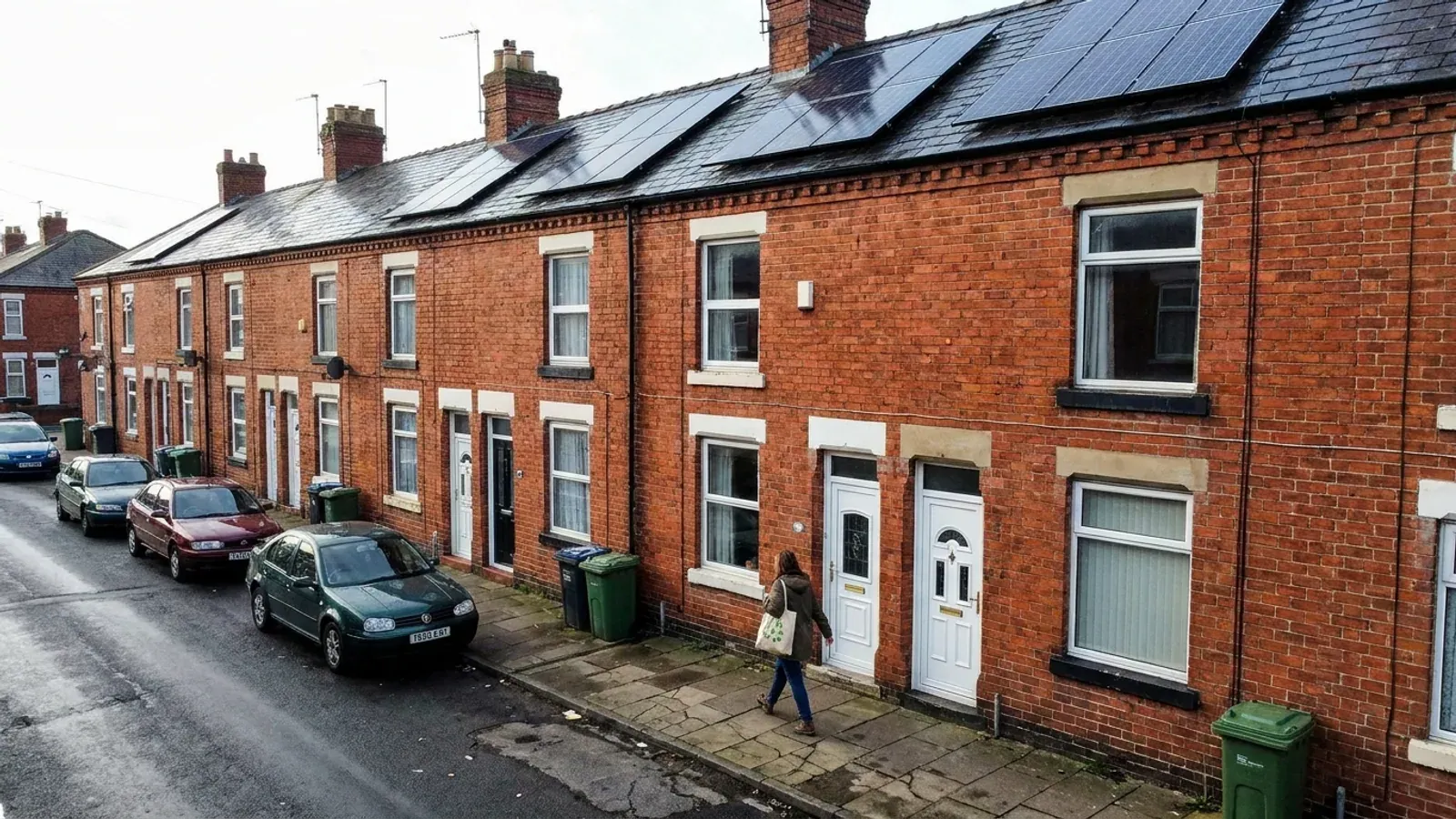
Tenant Power creates a shared renewable energy model. Social landlords fit solar panels and a home battery linked to Octopus Energy software. When the sun shines, the property generates clean electricity for the tenant to use. Any unused power goes into the battery, and Octopus automatically manages when that stored energy is exported to the grid.
The key difference between Tenant Power and standard variable tariffs comes down to price structure. Standard variable tariffs are subject to Ofgem's price cap, which limits energy rates and standing charges, not total bills. For 1 October to 31 December 2026 in Great Britain, the illustrative annual dual-fuel Direct Debit bill at typical consumption is £1,723; your actual bill depends on how much energy you use. Tenant Power gives qualifying tenants a guaranteed discount of 25% to 30% off standard variable electricity unit rates.
Smart technology powers this entire setup behind the scenes. Octopus Energy uses its Kraken platform to track household energy generation and battery storage in real time. Kraken controls when to charge the battery during cheap off-peak hours and when to export power back to the national network when demand is high.
It helps to distinguish Tenant Power from the Octopus Zero Bills initiative. Zero Bills guarantees zero energy bills for 5 to 10 years on select new-build social housing constructed to top energy standards, such as Sovereign Network Group's Nexa Fields project in Exeter or Clarion Housing Group's Hollymead Square development in Essex. Tenant Power, on the other hand, is designed for existing or retrofitted social homes, giving tenants a direct unit-rate discount rather than a total bill waiver.
Use our referral link, and we'll both get £50 credit once your switch is complete.
Existing customer? Find out how you can benefit too. T&Cs apply (only one switching offer per household)
How It Works for Social Housing Tenants
For households living in qualifying properties, Tenant Power offers a direct reduction in everyday running costs. Tenants receive a fixed discount off standard variable electricity unit rates, typically 25% to 30%, with the rate agreed case by case for each scheme. Octopus's own example is a 25% discount saving around £200 a year on their electricity bills, based on October 2025 price cap rates rather than a 2026 outcome.
Savings increase significantly if your landlord fits a heat pump alongside solar panels and a battery storage system. Octopus estimates average savings of £432 a year for a home with solar, a battery and a heat pump replacing gas heating, again at October 2025 standard variable rates. Your own saving will depend on your scheme's discount and how you use energy.
A central feature of the tariff is fair distribution across housing developments. The unit rate discount is identical for every tenant in a participating scheme. Whether your home sits directly under a main solar array or receives slightly less sunshine due to roof orientation, your percentage discount remains exactly the same.
Tenants do not need to fill out complex application forms or organise system installations themselves. Your housing association or local council sets up the scheme and fits the hardware. Once the equipment is active, you simply switch your electricity account to Octopus Energy and select the Tenant Power tariff to start getting the discounted rates.
Tenant Power focuses on electricity unit rates. If your property uses gas for heating, your gas supply stays on a standard variable or fixed energy tariff, unless your landlord replaces the gas boiler with an electric heat pump. Your electricity charges appear on your Octopus Energy bill. You can keep your gas tariff with any supplier, with gas billed separately under that tariff.[1]
Joining Tenant Power does not affect your rights to state support schemes. Eligible households can receive the £150 Warm Home Discount alongside their tariff savings. Most receive it automatically, but Scottish Broader Group customers must apply to their supplier.[2]
How It Works for Housing Associations and Landlords
Social housing providers face tough targets to improve home energy efficiency and lower carbon emissions across their portfolios. Before Tenant Power, installing clean technology required substantial capital spending without any direct financial payback for the housing association.
Tenant Power changes this balance by creating a commercial return for landlords. When rooftop solar panels generate excess electricity during daytime hours, that power charges an Octopus-optimised battery. When national grid demand peaks in the evening, Octopus automatically exports that stored energy back to the grid.
Landlords receive export payments for supplying clean energy back to the network during high-demand periods. This revenue stream gives housing associations a clear return on investment, helping to offset the initial purchase and maintenance costs of the hardware.
Housing providers can take the income earned from grid exports and reinvest it into further property upgrades. This creates a practical cycle for funding additional insulation, heat pumps, or solar panels across homes that have not yet been retrofitted.
The scheme fits directly alongside government retrofit funding programmes. The Warm Homes: Social Housing Fund (formerly SHDF Wave 3) allocated £1.29 billion, alongside a £295 million top-up for 2026/27, to help English social landlords upgrade homes below EPC Band C through to September 2028. Combined with the broader £15 billion Warm Homes Plan launched in January 2026, housing associations can pair public grant funding with Tenant Power export revenue to speed up retrofits.
Eligibility and Property Requirements
To access the Tenant Power tariff, a property must meet specific equipment and tenure criteria. Because the tariff relies on automated energy trading and on-site generation, standard homes without green technology cannot sign up.
Heat pumps are optional. Octopus's highest savings estimate, £432 a year at October 2025 rates, assumes a smart heat pump added to the solar and battery setup and replacing gas heating.
Individual tenants cannot sign up for Tenant Power on their own initiative. Private renters and buy-to-let landlords are currently excluded from the tariff, as it calls for a multi-property partner agreement between Octopus Energy and a registered social housing provider.
Which Housing Providers Are Currently Participating?
Octopus Energy works with several leading housing associations and local authorities across Great Britain to roll out Tenant Power and related clean energy initiatives.
Confirmed landlord partnerships:
- Together Housing Group: Partnered in January 2026 to roll out Tenant Power across an initial 1,500 social homes in the North of England as part of a £120 million decarbonisation scheme part-funded by the West Yorkshire Combined Authority.
- Grampian Housing Association: Expanded the tariff into Scotland in April 2026, starting with 114 homes in Aberdeenshire before scaling across more than 200 properties.
- United Welsh: Launched the tariff in May 2026 to bring shared renewable discounts to social housing developments in Wales.
- Sovereign Network Group (SNG): Active with Octopus on Zero Bills projects, including Nexa Fields in Exeter.
- Clarion Housing Group: Running Zero Bills developments in Essex, such as Hollymead Square.
Octopus Energy aims to scale the scheme from over 1,000 tenants in initial trial phases to more than 10,000 committed social homes by the end of 2026.
Social landlords looking to join can partner with Octopus Energy directly or arrange hardware retrofits through integrated industry specification frameworks, such as Wienerberger RoofSpec+, which integrated Tenant Power compatibility in May 2026.
Are There Alternatives to Tenant Power?
If you live in private rented accommodation, or if your social landlord has not yet joined the Tenant Power scheme, you cannot access this specific discounted tariff. However, Octopus Energy offers several standard variable, fixed, and smart tariffs to individual UK energy consumers.
| Tariff Name | Tariff Type | Electricity Unit Rate | Electricity Standing Charge | Exit Fee |
|---|---|---|---|---|
| Tenant Power | Social housing discount | 25% to 30% off standard variable rate | Standard Octopus rate | None |
| Flexible Octopus | Standard variable | 25.355p / kWh | 50.204p / day | None |
| Octopus 12M Fixed | 12-month fixed rate | 28.9392p / kWh | 50.204p / day | £50 per fuel |
| Octopus 18M Fixed | 18-month fixed rate | 27.7633p / kWh | 50.204p / day | £75 per fuel |
Flexible Octopus is the supplier's standard variable tariff. For the quarter running from 1 October 2026, paying by Direct Debit in the East Midlands, it charges 25.355p per kWh for electricity with a 50.204p daily standing charge, and 7.82355p per kWh for gas with a 28.455p daily standing charge. Rates vary by region. It has no exit fees, meaning you can leave at any time.
If you prefer price certainty, fixed tariffs are also available. In the East Midlands on 5 November 2026, Octopus 12M Fixed sets electricity at 28.9392p per kWh and gas at 9.650445p per kWh, with an exit fee of £50 per fuel. Octopus 18M Fixed sets electricity at 27.7633p per kWh and gas at 9.413355p per kWh, with an exit fee of £75 per fuel. Octopus reprices these tariffs often, so check your own quote.
For households with smart meters, Octopus also runs smart time-of-use tariffs such as Octopus Agile or Cosy Octopus. These offer lower rates during off-peak windows but call for active energy management. Tenant Power remains unique because it gives social housing tenants a simple, hassle-free percentage discount off standard rates without requiring them to shift their daily usage habits.
Tenants on Tenant Power are free to switch electricity suppliers if they choose. However, switching away from Octopus Energy ends your participation in Tenant Power, and you will lose the 25% to 30% unit-rate discount on your electricity bill.
Frequently asked questions
Can private renters get the Tenant Power tariff?
No. Tenant Power is only available to tenants living in social housing, affordable housing, or shared-ownership properties where the landlord has signed a formal partnership agreement with Octopus Energy and installed compatible solar panels and battery storage.
How do tenants sign up for Octopus Tenant Power?
Tenants do not apply directly to Octopus Energy to start the scheme. Your housing association or local council must first fit the necessary solar and battery hardware. Once the installation is complete, you switch your electricity account to Octopus Energy to receive the discounted tariff.
What happens if a tenant on Tenant Power wants to switch suppliers?
Tenants on Tenant Power can switch energy suppliers at any time without paying an exit fee. However, leaving Octopus Energy means leaving the Tenant Power tariff, so you will forfeit the 25% to 30% unit-rate discount on your electricity bills.
Is Tenant Power the same as the Octopus Zero Bills scheme?
No. Octopus Zero Bills guarantees zero energy bills for 5 to 10 years on top-spec, highly insulated new-build homes. Tenant Power is designed for existing or retrofitted social housing, providing a 25% to 30% discount on electricity unit rates.
Can tenants on Tenant Power still claim the Warm Home Discount?
Yes. Tenant Power is a commercial tariff offering lower unit rates, while the Warm Home Discount is a government scheme. Eligible low-income households can receive both their Tenant Power discount and the £150 Warm Home Discount. Most receive the rebate automatically, but Scottish Broader Group customers must apply to their supplier.
Does Octopus Energy pay feed-in tariffs or export payments to social housing tenants?
Under the Tenant Power setup, export payments for surplus stored solar power go directly to the housing association or local council. Landlords use this income to fund future property retrofits, while tenants benefit directly from lower electricity rates.
Related reviews and comparisons

Cheapest Energy Suppliers in the UK
The lowest annual estimate comes with an exit fee, while the cheapest fee-free alternative costs about £33 more a year. We have ranked 60 tariffs this month, and the cheapest deals are a mix of tracker and standard variable tariffs. Tracker tariffs link their unit rates to an outside benchmark, such
Read article →Octopus Energy vs 100Green
Flexibility is the other trade-off. 100Green's fixed deals priced here have no exit fees, so you can leave early without paying. Octopus's fixed deals are cheaper but charge £100 or £150 if you leave early, depending on the deal.
Read comparison →Octopus Energy vs Outfox Energy
Both suppliers have a 4.8 Trustpilot rating, although a bigger share of Octopus reviews are five-star (90% against 76%). Outfox may suit you if price and quick email or webchat replies come first. Octopus may suit you better if you want no tie-in on the cheapest deal and a well-rated app.
Read comparison →Prime Outgoing Octopus prices
A fixed-term export tariff that pays a higher rate from 4pm to 7pm and a lower rate at other times.
Read more →Intelligent Octopus Flux prices
Flux with Octopus deciding when the battery charges and discharges.
Read more →Related guides

Octopus Energy Refer a Friend Code – 2026
Octopus Energy runs one of the most popular refer-a-friend schemes in the UK energy market. While many suppliers stopped offering sign-up bonuses during the recent energy crisis, Octopus kept its scheme open. If you use a referral link from an existing customer to switch your gas or electricity, you
Read guide →
Average Gas and Electricity Bill for a Three Bed House (2026)
If you live in a three-bedroom house, you might wonder if your energy bills are normal or if you are paying too much. For comparison purposes, this guide uses Ofgem's medium-consumption benchmark of 2,500 kWh of electricity and 9,500 kWh of gas a year. This usually describes a property with two or t
Read guide →
Octopus 12M Fixed Tariff Review: Should You Switch in 2026?
Energy prices in Great Britain remain central to household budgets as autumn turns into winter. On 1 October 2026, the Ofgem price cap rose by 4% to an average of £1,723 a year for a standard dual-fuel household paying by Direct Debit. With further price rises forecast for the start of 2027, many ho
Read guide →
Written by
Rob Gibbs
Hi, I'm Rob, and I run Energy-Review.co.uk. I initially started this project in 2018 when I was looking to switch energy suppliers and found there wasn't a website that provided simple, data-backed reviews on all the suppliers available. Since then, I have spent a lot of time (too much, some may say!) looking at all publicly available data about each supplier and writing reviews using this information. These reviews are updated as regularly as possible, and any data is backed up by a source where necessary. I have also started writing guides on various energy-related topics, which hopefully you will find useful. If you find any issues, please use our contact form to let us know.