
ScottishPower Feed-in Tariff Guide 2026
Existing ScottishPower Feed-in Tariff customers receive guaranteed payments for generation, while new solar owners can earn up to 15p per kWh on export tariffs.
Understanding the Legacy ScottishPower Feed-in Tariff
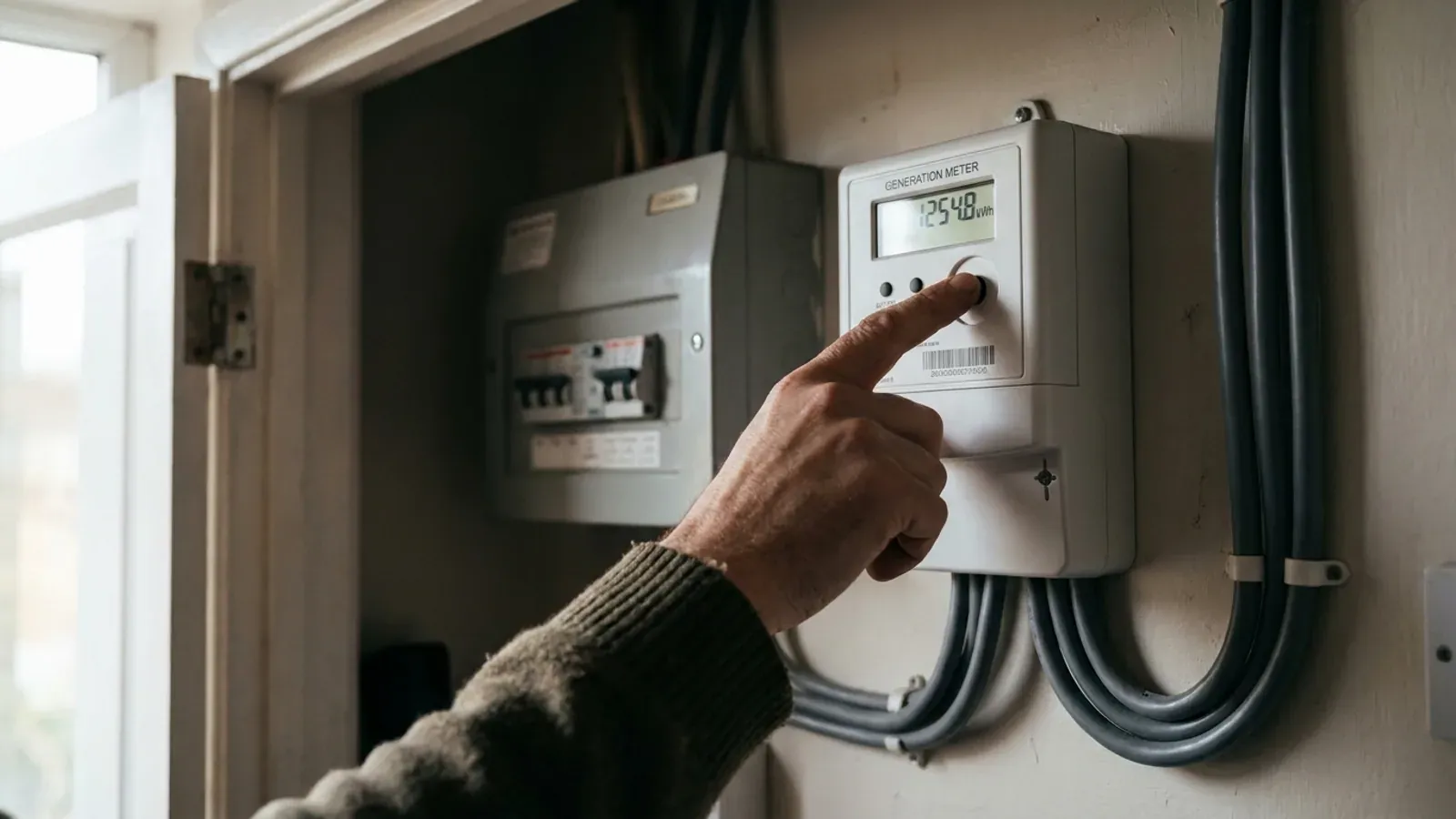
The Feed-in Tariff (FIT) was a UK government scheme created to encourage households to install renewable energy systems, such as solar panels and wind turbines. The scheme closed to new applicants on 1 April 2019. If your solar setup was accredited before that date, your contract remains intact. ScottishPower continues to administer payments for registered account holders for the full length of their agreement, which lasts 20 years for systems registered on or after 1 August 2012, or 25 years for systems registered before that date.
FIT payments consist of two separate elements. The first is the Generation Tariff, which pays a fixed rate for every single kilowatt-hour (kWh) of electricity your system produces, regardless of whether you use it in your home. The second is the Export Tariff, which pays for the excess clean energy you send back into the National Grid. For domestic systems with a total capacity of up to 30 kW that do not have a dedicated export meter, Ofgem rules set export at a deemed level of 50% of your total generation.
Each year on 1 April, FIT rates are adjusted for inflation. On 1 April 2026, the official indexation method changed from the Retail Price Index (RPI) to the Consumer Price Index (CPI). For the 2026/27 payment year (FIT Year 17), Ofgem applied a 3.4% CPI uplift to all legacy rates. For systems registered from 1 August 2012 onwards, the statutory FIT export rate for 2026/27 is 7.64p per kWh. Older systems registered between April 2010 and July 2012 receive a statutory export rate of 5.43p per kWh.
| Tariff Component | How It Is Calculated | Key Features for Households |
|---|---|---|
| Generation Tariff | Based on actual generation meter readings submitted quarterly. | Guaranteed payment for all electricity produced; independent of home energy consumption. |
| Deemed Export Tariff | Calculated automatically as 50% of total generation volume. | No smart meter needed; ideal for homes using most generated power or using battery storage. |
| Metered Export Tariff | Based on actual exported kWh measured by a smart meter or export meter. | Requires an approved export meter; at the same export rate, pays more than deemed export when actual export exceeds 50% of generation. |
Your FIT contract is backed by statutory licence obligations set by Ofgem. This means ScottishPower must pay your generation earnings even if you change your import electricity supplier or switch your export tariff to a modern Smart Export Guarantee (SEG) rate elsewhere.
Use our referral link, and we'll both get £50 credit once your switch is complete.
Existing customer? Find out how you can benefit too. T&Cs apply (only one switching offer per household)
How to Submit Your FIT Meter Readings to ScottishPower
ScottishPower operates a 90-day billing cycle for Feed-in Tariff payments. This means you need to submit your generation meter readings every quarter to receive your money. Payments are sent directly to your bank account within 90 days of ScottishPower receiving and verifying a valid reading submission.
ScottishPower uses a rolling 90-day billing cycle. Readings submitted less than 90 days after the last billed reading are validated and retained but do not trigger an invoice. Use the online reading service; email submissions are accepted for installations requiring multiple readings or when the online service returns an error.
Reading failures usually happen when the submitted figure is lower than a previous record or when the generation increase appears unusually high. If your solar inverter was replaced after a breakdown, notify ScottishPower before logging a new reading. Failing to report an inverter replacement can lead to frozen payments while ScottishPower verifies your system setup.
Changing FIT Ownership When Moving House
When you buy or sell a property with solar panels registered on the FIT scheme, the entitlement to future FIT payments passes to the new property owner. The solar panels cannot be split from the property FIT contract unless explicit legal arrangements are made. To prevent payment delays, both the buyer and seller must complete the ownership transfer process promptly.
The transfer process involves updating the Central FIT Register managed by Ofgem. ScottishPower handles this change on behalf of its registered customers, but they require specific legal proof of ownership before updating account details and bank transfer instructions.
The seller receives a final payment covering generation up to the completion date. The buyer starts earning payments from the completion date onwards once ScottishPower verifies all documents. Timings vary, so ask ScottishPower how long the transfer will take and whether payments pause until ownership is confirmed.
Smart Meters and Your Legacy FIT Contract
Installing a smart meter does not alter or cancel your original FIT Generation Tariff contract. You will continue to earn your full guaranteed generation rate for every kWh produced by your solar panels. However, upgrading to a smart meter can change how your exported electricity is measured and paid.
Under legacy FIT rules, domestic systems without an export meter rely on deemed export, which assumes you send 50% of your generated energy to the grid. Where a smart meter can properly measure the eligible installation's export, FIT export payments generally move from deemed to metered amounts. Specific exceptions can apply, including some battery-storage configurations. Notify your FIT licensee when a smart meter or battery is installed.[1]
| Setup Type | Deemed FIT Export (50%) | Smart Metered Export |
|---|---|---|
| Home with battery storage | Pays 50% of generation at your FIT export rate. | Pays only actual export, which a battery can reduce. |
| High daytime home usage | Pays 50% of generation at your FIT export rate. | Pays only actual export, which high daytime use can reduce. |
| Unoccupied during peak sun hours | Pays 50% of generation at your FIT export rate. | Pays actual export, which can exceed 50% of generation. |
You can calculate whether staying on deemed FIT export makes financial sense by comparing your actual export percentage with available market export rates. Compare 50% of annual generation multiplied by your applicable FIT export rate with actual annual export multiplied by the alternative export rate. Include any change in import costs, and check whether you remain eligible for deemed export.
Missed the FIT? ScottishPower Smart Export Guarantee (SEG)
If your solar panels were installed after 31 March 2019, you cannot join the legacy Feed-in Tariff scheme. Instead, you must apply for the Smart Export Guarantee (SEG). Under DESNZ regulations, large electricity suppliers like ScottishPower must offer a tariff that pays households for clean energy sent to the grid.
ScottishPower offers three distinct SEG rates under its SmartGen tariff range. Unlike legacy FIT generation payments, SEG rates are variable and require an operational smart meter capable of recording half-hourly export readings.
| ScottishPower Tariff | Export Rate (p/kWh) | Eligibility Requirements |
|---|---|---|
| SmartGen (Standalone) | 6.0p | Open to solar owners meeting SEG certification and metering requirements; no ScottishPower import contract needed. |
| SmartGen Premium | 12.0p | Must buy electricity import from ScottishPower. |
| SmartGen Premium Plus | 15.0p | Must buy import from ScottishPower and have solar/battery installed by them. |
If you are on a legacy FIT scheme, Ofgem rules allow you to opt out of your FIT export payments and move your export to ScottishPower SEG (or another supplier's SEG rate) while keeping 100% of your FIT generation payments. This is worth considering if you export most of your solar energy and can access a premium export rate of 12.0p or 15.0p per kWh.
Under Ofgem rules, you can change your decision to opt into or out of FIT export payments only once every 12 months. Switching between SEG suppliers is subject to the relevant contract terms, not a blanket annual switching limit. Before switching your export tariff away from deemed FIT export, check your export share and compare rates across the market. Standalone import tariffs from other suppliers, such as Good Energy or British Gas, offer different standing charges and unit rates, so compare total home energy costs before moving import tariffs just to unlock higher SEG earnings.[1]
Frequently asked questions
Can you change your feed-in tariff supplier to ScottishPower?
Yes. You can transfer the administration of your existing FIT account to ScottishPower at any time. Moving your FIT management to ScottishPower does not alter your guaranteed generation rate or contract end date, and you do not need to buy your home import electricity from them to make the transfer.
How do I speak to a human at the ScottishPower FIT team?
You can reach the dedicated FIT customer service team by sending an email to FIT@scottishpower.com with your account details. For reading submissions, use fitreads@scottishpower.com. You can also contact ScottishPower general customer care by phone, though routine FIT administration is handled predominantly by their specialised email and portal teams.
What happens to my ScottishPower FIT if I get a smart meter?
Installing a smart meter has no impact on your FIT Generation Tariff payments, which continue as normal based on your generation meter readings. Your FIT export payments generally move to actual metered export when a suitable smart meter can properly measure your installation's export, although specific exceptions can apply. Ask your FIT licensee how your metering and any battery storage affect your payments.
How do I report a change of ownership for my solar panels?
To report a change of ownership, complete ScottishPower's FIT Change of Responsibility/Ownership form and email it to FITCORs@scottishpower.com. For a house sale, include Land Registry documentation or a solicitor's ownership letter, the populated Vendor Form, and photographs showing the generation meter's serial number and reading, plus the export meter's details if applicable.
Can I keep my FIT generation payments if I switch export to SEG?
Yes. Ofgem rules state that generators can opt out of FIT export payments to sign up for a higher Smart Export Guarantee (SEG) rate while keeping 100% of their FIT generation tariff payments with their existing licensee.
Related reviews and comparisons

Ecotricity Review
Ecotricity was founded in 1995 and says it was the world's first green energy supply company. It delivered renewable electricity to its first customer in 1996. Its founder, Dale Vince, was given an OBE in 2004 as part of wider recognition for his work towards a greener Britain.
Read review →British Gas vs So Energy
British Gas says it has been looking after Britain's homes for over 200 years. Today it is part of Centrica PLC and shares the group's values and plans for the future. Its about page says it powers over 8 million homes and businesses in Britain, which it describes as more than any other supplier.
Read comparison →British Gas vs Utilita Energy
Neither supplier has a clear lead on everyday service. Citizens Advice scores them almost the same, at 2.61 for British Gas and 2.53 for Utilita, and Which? customers gave both suppliers 2 out of 5 for overall customer service.
Read comparison →
Utilita Energy Review
Utilita has been offering household energy since 2003 and calls itself the home of Smart Pay As You Go. Its whole approach is built around prepayment, where customers add credit before they use energy rather than paying a bill afterwards. It describes itself as the UK's Pay As You Go specialists and
Read review →
Good Energy Review
Good Energy describes itself as one of the UK's first renewable energy companies, with more than 25 years in the business. The brand is a trading name of Good Energy Services Limited, a company registered in England and Wales with its registered office at Monkton Park in Chippenham, Wiltshire.
Read review →Related guides

Can I switch my supplier if I have solar panels?
Solar panels are a common sight on homes across the UK. The SEG rules explained in this guide apply in Great Britain; Northern Ireland has separate arrangements. They offer a clear way to cut your electricity bills by generating your own power, and they give you the chance to earn money by selling a
Read guide →
Are Octopus Energy saving sessions worth it?
Energy bills remain a heavy burden for many households. While finding a cheaper tariff is one way to cut costs, Octopus Energy offers a different approach. Its Saving Sessions scheme pays you for changing when you use electricity.
Read guide →
What is a REGO certificate?
When you sign up for a renewable energy tariff, you might picture wind turbines and solar panels sending power straight to your home. In reality, all electricity mixes together once it enters the National Grid. To track how much renewable electricity is actually generated, the UK uses a system calle
Read guide →
Written by
Rob Gibbs
Hi, I'm Rob, and I run Energy-Review.co.uk. I initially started this project in 2018 when I was looking to switch energy suppliers and found there wasn't a website that provided simple, data-backed reviews on all the suppliers available. Since then, I have spent a lot of time (too much, some may say!) looking at all publicly available data about each supplier and writing reviews using this information. These reviews are updated as regularly as possible, and any data is backed up by a source where necessary. I have also started writing guides on various energy-related topics, which hopefully you will find useful. If you find any issues, please use our contact form to let us know.