
How to get a free Octopus Energy cuddly toy?
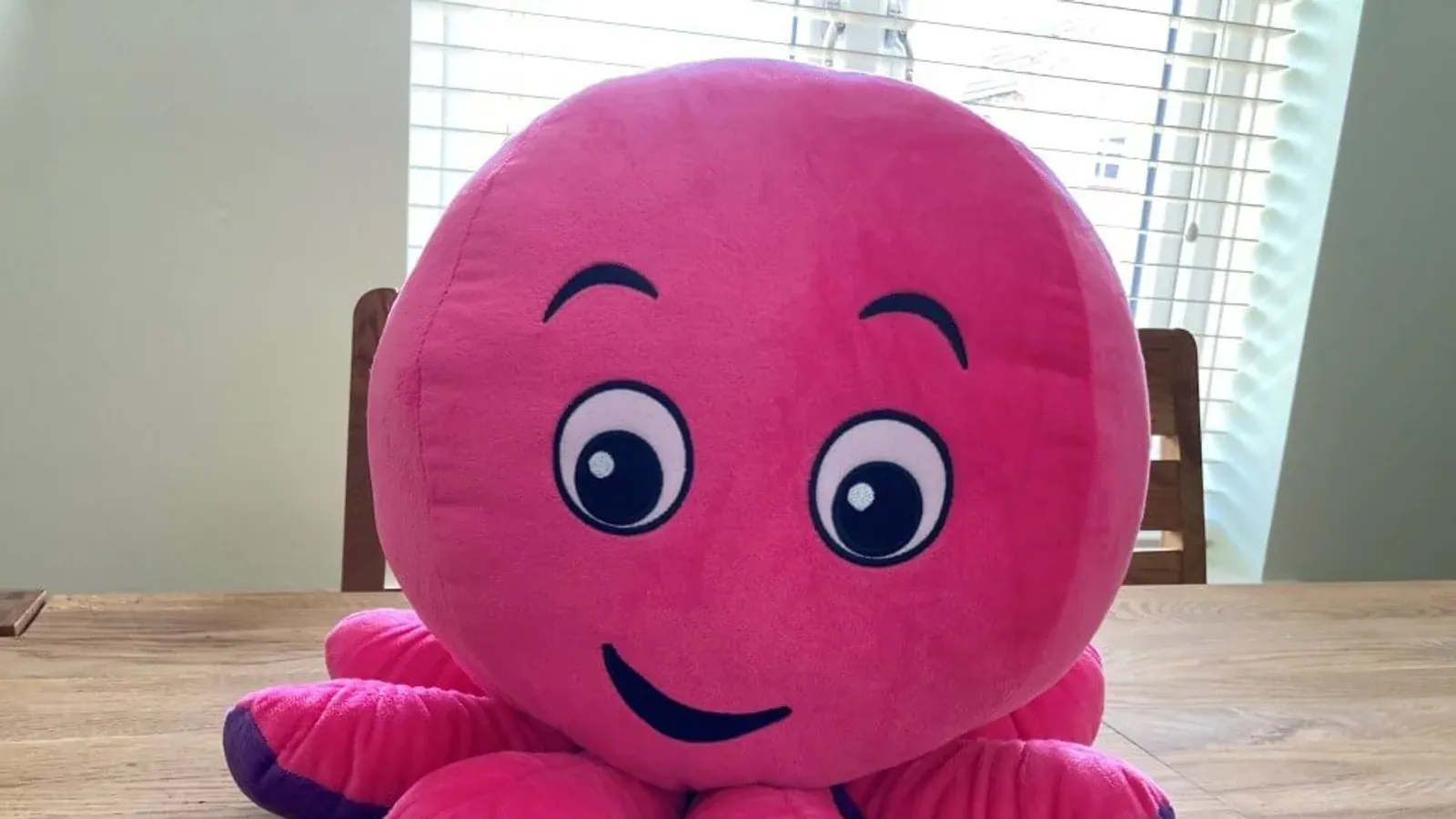
If you are an Octopus Energy customer, you might recognise their pink, eight-legged mascot, Constantine.
Introduction
If you are an Octopus Energy customer, you might recognise their pink, eight-legged mascot, Constantine. Fluffy plush versions of the mascot have become highly popular, often appearing across social media and in homes around the UK.
In the past, the supplier sent these toys out to new customers for free. However, this policy changed during the energy crisis. Today, you can only get a Constantine plushie by buying one directly, using reward points, or winning a promotional giveaway. This guide explains exactly how to get your hands on one, how the profits are used to support vulnerable households, and what you need to know about Octopus Energy's current tariffs if you are thinking of switching.
Use our referral link, and we'll both get £50 credit once your switch is complete.
Existing customer? Find out how you can benefit too. T&Cs apply (only one switching offer per household)
How to get an Octopus plushie today
Because automatic giveaways ended a few years ago, you now have three main ways to get an Octopus Energy cuddly toy.
How the Octoplus rewards scheme works
To get the plushie for £8, you need to be a member of Octoplus. This is a free rewards programme that allows customers to earn points, known as Octopoints, in exchange for managing their energy use.
The main way to earn Octopoints is by taking part in Saving Sessions. During these events, Octopus asks customers to use less electricity for a set period, usually during peak evening hours. If you successfully shift your energy use away from this time — for example, by waiting to run the washing machine or dishwasher until later — you earn points.
Once you have built up enough points, you can convert them into credit on your energy bill, or use them to buy Shoptopus merchandise at a heavy discount.
Where does the merchandise money go?
Octopus Energy states that it makes zero profit on the sale of Constantine plushies. Instead, profits from the Shoptopus store go directly into the Octo Assist fund.[1]
The Octo Assist fund is a dedicated pot of money designed to help households that are struggling to pay their energy bills. Originally set at £30 million, the supplier increased the fund to £40 million in October 2025 to offer more support through the winter months. The money raised from merchandise sales helps to fund several types of direct customer support.
- Direct bill credits applied to the accounts of struggling customers.
- Standing charge holidays to pause the fixed daily costs of energy.
- Debt write-offs for households facing severe financial difficulty.
- Free electric blankets to help people heat themselves rather than their whole home.
- Thermal cameras that customers can borrow to spot draughts and heat loss in their properties.
Alongside this direct financial help, Octopus is also subsidising up to 1,000 home upgrades for vulnerable households through the government's Energy Company Obligation (ECO) scheme. This includes installing free solar panels and heat pumps to help lower bills in the long term.
Octopus Energy tariffs and exit fees
If you are researching Octopus Energy because you are thinking about switching to them, it is important to understand how their tariffs work today. Founded in 2015, Octopus has grown to become the UK's largest energy supplier. They supply 100% zero-carbon electricity across all their tariffs and offer carbon offsetting for gas.
Historically, the supplier usually did not charge exit fees, although it has introduced them during periods of exceptional market volatility. While their standard variable and tracker tariffs remain free of exit fees, Octopus has reintroduced early exit fees on some of their new fixed-term tariffs.
For example, if you sign up for a fixed deal today, you may have to pay a fee if you decide to leave before the 12-month term ends. The table below compares their standard flexible tariff with a current 12-month fixed option.
| Tariff name | Electricity rates | Gas rates | Exit fees |
|---|---|---|---|
| Flexible Octopus | Unit: 25.09605p/kWh Standing charge: 50.3139p/day | Unit: 7.18725p/kWh Standing charge: 28.6419p/day | None |
| Octopus 12M Fixed July 2026 v2 | Unit: 24.2466p/kWh Standing charge: 50.31411p/day | Unit: 6.5583p/kWh Standing charge: 28.64169p/day | £50 per fuel |
As the table shows, the fixed tariff offers slightly cheaper per-unit rates for both gas and electricity, which could save you money on the energy you actually use. However, it has a £50 exit fee per fuel (£100 total for a dual-fuel household) if you switch before the final 49 days of the term. The flexible tariff has slightly higher unit rates, but allows you to leave at any time without a penalty.
Standing charges and low-use trials
Both the flexible and fixed tariffs come with daily standing charges. This is a fixed fee you pay every day just to be connected to the grid, regardless of whether you use any gas or electricity. For a dual-fuel home on Octopus, this currently adds up to around 78p a day.
High standing charges have been a major source of frustration for consumers, particularly those who use very little energy but still face high fixed bills. To address this, Ofgem launched a lower standing charge tariff pilot in June 2026. Octopus is one of four suppliers offering the tariff to eligible customers. This trial is designed to test whether shifting costs away from the fixed daily charge and onto the unit rate can help make bills fairer for people who consume very little power.
The history of the Octopus mascot
The Octopus brand name reflects the adaptability of the marine animal. Octopuses are highly flexible and capable of adapting to their environment, which the founders felt mirrored their goal to push green change and offer flexible energy solutions.[1]
The mascot itself was named Constantine by a member of staff who simply liked the name. In the early days of the company, a small toy maker in Wales hand-sewed the first versions of the plush octopuses. These were kept around the supplier's offices, but as customer interest grew, the company began producing larger versions and sending them out to people who asked for them.
Because demand eventually grew into the tens of thousands, it was no longer possible to rely on hand-sewn models. Today, the toys are ethically produced by a team in China. To match the company's green energy focus, the modern plushies are made entirely from 100% recycled materials, with both the outer fabric and the inner filling derived from recycled plastic bottles.
Frequently asked questions
Do you get a free plushie just for signing up to Octopus Energy?
No. Octopus stopped sending free toys automatically to all new customers during the energy crisis. You can now only get one for free by winning an Octoplus competition or a flash giveaway.
How much does the Octopus cuddly toy cost?
A full-sized Constantine plushie costs £16 through the Shoptopus online store, with shipping included. If you are a member of the Octoplus rewards scheme, you can use your points to buy it for £8.
Do I need a smart meter to get the half-price merchandise discount?
Yes. To access the Octoplus rewards scheme and get the £8 discount on the plushie, you must have a working smart meter that sends half-hourly readings to the supplier.
Are Octopus Energy tariffs completely free of exit fees?
Not anymore. While their standard flexible and tracker tariffs still have no exit fees, Octopus has reintroduced early exit fees on some of their newer fixed-term deals. For example, the currently listed 12-month fixed tariff from July 2026 carries a £50 exit fee per fuel.
Sources
Where do the profits from the Shoptopus store go?
Octopus makes zero profit on the merchandise. All the money raised goes into the £40 million Octo Assist fund, which provides bill credits, debt write-offs, and free electric blankets to households struggling with energy costs.
Related reviews and comparisons
Octopus Energy vs Utilita Energy
Set up in 2015, Octopus Energy is backed by investors such as Octopus Group, Generation Investment Management, and Tokyo Gas. Through its own growth and buying other suppliers, it has become the UK's largest domestic energy supplier. In September 2026, it announced a planned deal to buy the Danish t
Read comparison →Octopus Energy vs Good Energy
Set up in 2015, Octopus Energy is privately owned and has grown to become the UK's largest domestic energy supplier. It builds its own software system, Kraken, which runs its billing and is sold to other companies. The supplier stands out for its digital customer service and its Octoplus rewards pro
Read comparison →Octopus Energy vs Sainsbury’s Energy
Started in 2015, Octopus Energy is the UK's largest domestic energy supplier. It has grown through its own growth and by buying other suppliers such as Bulb and Shell Energy Retail. Backed by the Octopus Group and global investors, it runs its billing and customer service on its own technology platf
Read comparison →
Outfox Energy Review
Outfox Energy is the trading name of Foxglove Energy Supply Limited, the company that holds its gas and electricity supply licences in Great Britain. Its published company address is in Leicester. Household customers enter their energy contract with Foxglove Energy Supply Limited, rather than with a
Read review →
E.ON Next Review
E.ON Next is the home energy brand of the wider E.ON group. It was set up to replace the older E.ON brand and npower after E.ON bought the company. Today, it is one of the UK's biggest domestic energy suppliers.
Read review →Related guides

Octopus Energy Refer a Friend Code – 2026
Octopus Energy runs one of the most popular refer-a-friend schemes in the UK energy market. While many suppliers stopped offering sign-up bonuses during the recent energy crisis, Octopus kept its scheme open. If you use a referral link from an existing customer to switch your gas or electricity, you
Read guide →
What is the average gas and electricity bill in the UK?
Energy bills remain a major part of household spending. Over the last few years, the cost of gas and electricity has seen massive changes, driven heavily by global events that affect the price suppliers pay for wholesale energy. For example, the Ofgem price cap rose by roughly 13% in July 2026, larg
Read guide →
Average Gas and Electricity Bill for a Three Bed House (2026)
If you live in a three-bedroom house, you might wonder if your energy bills are normal or if you are paying too much. For comparison purposes, this guide uses Ofgem's medium-consumption benchmark of 2,500 kWh of electricity and 9,500 kWh of gas a year. This usually describes a property with two or t
Read guide →
Written by
Rob Gibbs
Hi, I'm Rob, and I run Energy-Review.co.uk. I initially started this project in 2018 when I was looking to switch energy suppliers and found there wasn't a website that provided simple, data-backed reviews on all the suppliers available. Since then, I have spent a lot of time (too much, some may say!) looking at all publicly available data about each supplier and writing reviews using this information. These reviews are updated as regularly as possible, and any data is backed up by a source where necessary. I have also started writing guides on various energy-related topics, which hopefully you will find useful. If you find any issues, please use our contact form to let us know.